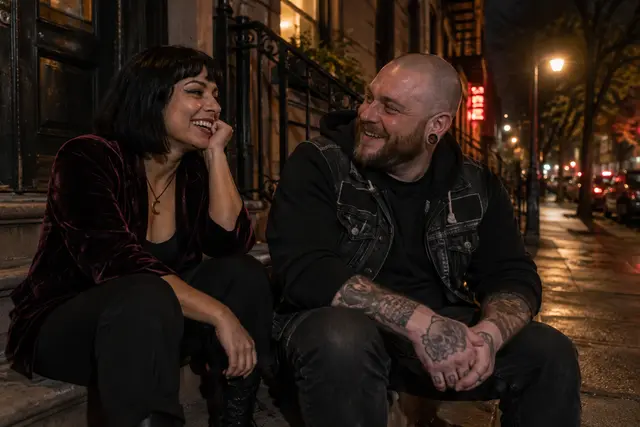
Low-Maintenance Friendships for Alt People: Stay Close Without Burning Out

Low-maintenance friendships are having a very real little bat-wing era. A lot of people want deep connection, but they are also tired, broke, busy, overstimulated and slightly haunted by the phrase “we should hang out soon.”
For alt people, this can feel extra weird. You may have a tiny local scene, friends scattered across cities, a night-shift schedule, a social battery the size of a cursed watch battery, or the classic problem of meeting someone cool at a show and then both of you vanishing like fog.
Why low-maintenance friendships are the real-talk topic right now
The phrase low-maintenance friendships has been floating around because it names something many adults already feel: we want friends, but we do not want friendship to become another inbox. Recent friendship research keeps pointing at the same tension. A 2026 AARP friendship study found that adults still see friendship as central to a good life, while also dealing with newer patterns where convenient contact can crowd out deeper connection. (aarp.org)
There is also a bigger loneliness backdrop. The World Health Organization’s Commission on Social Connection reported that loneliness estimates are especially high for young adults ages 18–29 compared with older age groups. (paho.org) A 2026 Guardian piece also noted the rise of online talk around having “no friends,” solo living aesthetics and the loss of weak ties — those tiny repeat interactions that can grow into real friendships. (theguardian.com)
So this is not just “people forgot how to text back.” It is jobs, money, moving, burnout, social media pressure, shrinking public hangout spots and the weird adult math of trying to see three friends, do laundry, eat vegetables and still have one evening to become a decorative gargoyle.
The good news: low-maintenance does not mean low-love. It can mean building friendships that survive quiet weeks, late replies, changing schedules and nervous “are we still cool?” spirals.
If the broader friendship recession for alt people is the storm cloud, low-maintenance friendship is the little black umbrella with a skull handle.
Low-maintenance does not mean “I never show up”
Let’s clear the fog first.
A low-maintenance friendship is not:
- Leaving every message unread for six months and expecting applause.
- Only appearing when you need a ride, a couch or emotional tech support.
- Saying “I’m bad at texting” but never making effort in any form.
- Treating a friend like a backup character in your personal vampire drama.
- Calling every conflict “too much” and disappearing.
A low-maintenance friendship is:
- Trusting that silence does not always equal rejection.
- Making care easier to repeat.
- Being honest about your capacity.
- Finding contact styles that fit both people.
- Letting the friendship breathe without letting it starve.
Think of it like black denim. It does not need hand-washing by moonlight every day, but you cannot drag it through a swamp forever and expect it to stay cute.
The difference between low-maintenance and neglected
Here is the cleanest test:
| Friendship pattern | How it feels |
|---|---|
| Low-maintenance | “We can go quiet and still come back warm.” |
| Neglected | “I only hear from them when they want something.” |
| Secure | “We know our rhythm, even if it is slow.” |
| Avoidant | “No one says what they need, so everyone guesses.” |
| Burned out | “I care, but every message feels like a task.” |
Low-maintenance friendship still has warmth. It has proof of care. It has some kind of rhythm, even if that rhythm is monthly memes, seasonal coffee, sending each other weird crow videos or meeting up every time the same goth night returns.
Why alt friendships can be uniquely hard to maintain
Alt people are not a single personality type. The scene has extroverts who know every door person in the city, introverts who communicate only through playlists, punks who make friends in five seconds, metalheads who seem terrifying until they give the softest hug, and goths who need three business days to recover from one successful hangout.
Still, a few common alt-life problems keep showing up.
1. Your people may be geographically scattered
If you live in a big city, your friends may be split between neighborhoods that feel like separate kingdoms. If you live in a small town, your closest alt friend may be an hour away, three states away or “online but spiritually next door.”
This is why online connection matters. A small room can be easier than a giant feed. A live chat can feel less like performing and more like sitting on the curb after a show. On Alt Chat, people use Night Chats and group rooms for that exact reason: casual contact that does not require planning a whole event.
2. The scene runs late
A lot of alt social life happens at night: shows, club nights, movie screenings, late chats, parking-lot talks, diners after the venue kicks everyone out. That is magical, but it can wreck your energy if you work early, have responsibilities or need recovery time.
Low-maintenance friendship lets you say, “I want to see you, but I cannot do three late nights this month unless my skeleton files a complaint.”
3. Everyone is curating, even when they hate curating
Alt culture has always had style, but social media adds pressure to make friendship look exciting. Matching outfits. Perfect venue photos. Everyone gathered in a beautiful spooky pile. Fun, yes. Required, no.
Research on young adult loneliness suggests loneliness can exist even when people have contact and companionship, especially during life transitions and when routine is unstable. (journals.plos.org) That tracks. You can be in group photos and still wonder who would come over if your week went sideways.
4. Social battery is real, even if the phrase is overused
Some people can do a pregame, a show, an afterparty, a group chat recap and brunch. Others can do one polite conversation with a person wearing a cool jacket and then need to lie on the floor beside a laundry pile.
Low-maintenance friendships give room for both.
The low-maintenance friendship agreement
You do not need a formal contract signed in eyeliner. But good low-maintenance friendships often have a quiet agreement underneath.
It sounds like this:
- “Late replies are okay, but ghosting after plans hurts.”
- “We do not need to talk every day, but we do check in.”
- “If something is wrong, we say it instead of vanishing forever.”
- “We can hang out in low-effort ways.”
- “We do not punish each other for having full lives.”
If your friendships feel fragile, it may be because these rules are assumed but never spoken. Saying them out loud can feel awkward, but awkward is survivable. Losing good people to guesswork is worse.
Tiny script: setting the vibe
Try this:
“I’m not always quick with replies, but I like talking to you. If I go quiet, it’s usually energy, not disinterest.”
Or:
“I’m trying to be better at staying connected without overpromising. Want to do a low-key monthly hang?”
Or, for the certified night creature:
“I am most alive after 10 p.m., but I respect your sleep schedule like a sacred artifact.”
Simple. Human. No dramatic cape required, though it would help the staging.
Build a friendship menu instead of a friendship chore list
A chore list says: text back, make plans, be available, remember everything, never be weird.
A friendship menu says: here are different ways we can stay close.
Try building a menu with your people.
The “one spoon” options
These are for days when you care but have the energy of a damp bat.
- Send a meme with no explanation.
- React to a story.
- Send a song title and say, “This made me think of you.”
- Text: “No brain, but hello.”
- Drop a photo of your outfit, pet, boots, dinner or current desk chaos.
- Say: “Still here, just quiet.”
The “two spoon” options
A little more effort, still easy.
- Ten-minute voice note exchange.
- Watch the same movie separately and text reactions.
- Share a mini playlist with five songs.
- Send a “three things from my week” message.
- Do a quick call while walking or folding laundry.
- Meet for coffee, fries, a bookstore lap or a record-shop browse.
The “full moon” options
For when the energy returns.
- Go to a show together.
- Host a horror night.
- Plan a thrift trip.
- Visit a goth night or punk gig.
- Make a shared playlist for a fake road trip.
- Sit somewhere public and people-watch like two stylish ravens.
This menu works because it gives friendship range. Not every connection needs a major hangout. Some friendships are kept alive by small sparks until everyone has energy for a bigger fire.
If you need places to make those small sparks happen offline, the guide to third places for alt people has ideas beyond “go stand in a bar and hope destiny wears eyeliner.”
The 5 friendship types every low-maintenance alt person needs
You do not need a giant friend group. You need a mix of connection types that fit your life.
1. The show friend
You mostly see each other at gigs. You may not know their full life story, but you trust their taste, their pit awareness and their ability to say “bathroom line?” with perfect timing.
How to maintain it:
- Send event flyers.
- Say hi every time, even briefly.
- Do not demand instant depth.
- Let it grow through repetition.
This is a weak tie with potential. Weak ties matter because repeated small contact can help build belonging. The Guardian’s 2026 loneliness coverage highlighted how these tiny social links can become the building blocks of deeper friendships. (theguardian.com)
2. The couch cryptid
This is the friend you can sit beside doing separate things. No performance. No forced updates. Just two people in the same space, existing.
How to maintain it:
- Plan low-speech hangs.
- Share snacks.
- Let silence be allowed.
- Keep the invite easy: “Want to rot on the couch and watch something spooky?”
3. The online familiar
They live far away, but they know your lore. They have seen your haircut changes, your breakup era, your “I am becoming a hat person” crisis and the night you posted a blurry moon photo with concerning intensity.
How to maintain it:
- Use small chat rooms instead of only public feeds.
- Make recurring check-ins casual.
- Swap voice notes if texting gets stale.
- Name the friendship as real, even if you have not met in person.
For many alt people, online friends are not lesser friends. They are the people who caught your weird frequency first. If giant servers feel too loud, make online friends in small chat rooms is a good next read.
4. The life-stage bridge
This friend is in a different season than you. Different job, relationship setup, city, schedule or budget. You may not overlap as easily anymore, but the care is still there.
How to maintain it:
- Stop expecting the old rhythm to return exactly.
- Build a new one.
- Accept shorter hangs.
- Avoid scorekeeping.
Try: “I miss our old chaos, but I still want a version of us that works now.”
5. The brave-new-friend
This is someone you do not know well yet, but there is a spark. Similar taste. Similar humor. Same habit of standing near the wall at events while pretending to study the architecture.
How to maintain it:
- Follow up within a day or two.
- Suggest one specific low-pressure plan.
- Keep the first hang short.
- Do not trauma-dump as a bonding speedrun.
Try: “It was cool talking to you about post-punk and terrible venue bathrooms. Want to grab coffee or hit the record shop sometime?”
How to reconnect without making it weird
Reconnecting is where many people freeze. The longer it has been, the more your brain writes a gothic novel called They Hate Me Now: A Tragedy in Seven Unanswered Texts.
Most of the time, people are not keeping a courtroom transcript. They are also tired. They also meant to reply. They also looked at the message, smiled, got distracted and then got swallowed by life.
The no-drama reconnect text
Use this:
“Hey, I know it’s been a while. I thought of you when I heard this song. No pressure to reply fast — just hope you’re doing okay.”
The honest-but-light text
“I fell off the planet for a bit, but I miss talking to you. Want to catch up soon in a low-pressure way?”
The repair text
If you know you hurt them or disappeared after plans:
“I’m sorry I went quiet after we made plans. That was not fair to you. I understand if you’re annoyed. If you’re open to it, I’d like to reconnect and do better.”
Notice the magic: no excuses parade, no guilt trap, no “I’m just the worst” fishing expedition. Accountability is hotter than a perfect outfit.
How to tell if a friendship can handle low maintenance
Some friendships thrive with space. Others need more frequent care. Neither is wrong.
Ask these questions:
- Do we both feel secure after quiet gaps?
- Is the effort roughly mutual over time?
- Can we say when we need more?
- Do we still celebrate each other?
- Do plans happen sometimes, or only theoretical future plans?
- When conflict happens, can we repair?
If the answer is mostly yes, you may have a sturdy low-maintenance bond.
If the answer is mostly no, the friendship may need a clearer rhythm — or it may be fading.
The “mutual over time” rule
Do not judge a friendship by one bad week. Judge it over a season.
Maybe you carried the connection during their job chaos. Later, they carried it while you were in breakup goblin mode. That is normal friendship weather.
But if you are always initiating, always soothing, always making plans, always forgiving and always pretending it does not sting, that is not low-maintenance. That is unpaid emotional stage crew work.
The alt person’s guide to making friendship easier
Here are practical systems that do not feel like productivity bro nonsense in a black hoodie.
1. Create a “people I like” note
Not a creepy dossier. Just a simple list so your overwhelmed brain does not forget good people exist.
Sections:
- People to text this month.
- People to invite to shows.
- People I want to know better.
- Friends who may need extra care.
- Friends who make me feel calm.
When you feel lonely, your brain may say, “I have no one.” The note says, “Actually, here are names.”
2. Use event-based friendship
Alt scenes are built for this. You do not have to invent a reason to hang out if the reason already exists.
Send:
“This show made me think of you. Want to go, or at least judge the flyer with me?”
Or:
“I’m thinking of going to this market for one hour. Want to wander?”
Plans feel easier when they have a container.
3. Make repeat rituals tiny
Big rituals fail when life gets loud. Tiny rituals survive.
Try:
- First Friday playlist swap.
- Sunday night “outfit autopsy” photos.
- Monthly horror pick.
- Payday thrift lap.
- Post-show “made it home” check.
- One shared Realm thread or group chat prompt.
Alt Chat’s Realm feed and profile Anthems can make this playful: swap the song on your profile, post a thread, or use music as the “I am thinking of you” signal without writing a whole essay.
4. Stop making every hang a masterpiece
Not every hangout needs the perfect outfit, perfect lighting, perfect venue and perfect emotional arc.
Some friendships grow because two people run errands together. Some grow in parking lots. Some grow through ten-minute chats outside loud rooms. Some grow because you both keep showing up to the same place and eventually move from nodding to talking.
A masterpiece is nice. A repeatable hang is better.
5. Practice the soft invite
A soft invite gives someone an easy yes and an easy no.
Examples:
- “I’m going to the record shop Saturday afternoon if you want to join.”
- “No pressure, but I’d love to catch up this week.”
- “I have about an hour of social energy. Want to grab coffee?”
- “I’m going to be in your area. Want a quick hello?”
This is better than “we should hang out,” which is where plans go to become ghosts.
When low-maintenance becomes loneliness in a cool coat
Here is the tricky part. Sometimes “I like low-maintenance friendships” is true. Sometimes it is a protective spell.
You may be calling it low-maintenance because:
- You are afraid of needing people.
- You expect rejection before it happens.
- You do not want to be seen trying.
- You learned to disappear before anyone could leave.
- You feel embarrassed that you want closer friends.
No shame. A lot of people have been there. But loneliness can get sneaky. It can put on sunglasses and say, “I’m just independent,” while quietly eating your weekends.
A 2026 systematic review on young adult loneliness argued that connection is shaped by more than individual choices; community and social conditions matter too. (academic.oup.com) Translation: if you are lonely, it does not mean you personally failed Friendship School. Your environment may be making connection harder.
Still, you deserve care. If loneliness starts feeling heavy or scary, tell someone you trust. If you are in the U.S. and feel like you might hurt yourself, you can call or text 988 for immediate crisis support.
Friendship red flags disguised as “low-maintenance”
Keep your standards, little crypt keeper.
Watch for:
- They mock you for wanting clarity.
- They only reply when bored or single.
- They cancel often and never reschedule.
- They keep you secret from the rest of their life.
- They treat your feelings like an inconvenience.
- They use “I’m low-maintenance” to avoid every repair.
- They expect loyalty but offer crumbs.
A real low-maintenance friend may be quiet, busy or slow to reply. But when they show up, you feel respected.
How to ask for more without sounding intense
Wanting more contact does not make you needy. It makes you a person, tragically cursed with a heart.
Try these scripts:
If you want more regular contact
“I like our friendship and I’d love a little more consistency. Could we do a monthly catch-up or send each other check-ins?”
If late replies make you anxious
“I’m okay with slow replies, but if you’re not up for talking, a quick ‘busy but okay’ helps me not overthink.”
If you feel like the backup friend
“I’ve noticed we mostly talk when plans fall through with other people. I like hanging out, but I need it to feel more mutual.”
If you need low-pressure plans
“I want to see you, but I’m low-energy lately. Could we do something easy, like a short walk or movie night?”
The right people may not do everything perfectly, but they will care that you asked.
How to become easier to be friends with, without shrinking yourself
This is not about becoming convenient, silent or endlessly chill. It is about making connection less confusing.
Try these habits:
- Reply honestly: “I want to answer this properly later.”
- If you cancel, suggest a new plan.
- Tell people your communication style before they have to guess.
- Celebrate their good news without making it about you.
- Ask specific questions, not just “how are you?”
- Remember one detail and follow up.
- Let friends have other friends without acting abandoned.
- Say when you are hurt before resentment grows fangs.
If starting conversations is the hard part, steal shamelessly from 50 conversation starters for goths and alt people. A good question is just a tiny lantern.
A simple 30-day low-maintenance friendship reset
No grand reinvention. No spreadsheet shrine. Just a month of small moves.
Week 1: Map your people
Write down:
- Three people you miss.
- Three people you want to know better.
- Three spaces where you could meet alt people.
- One friendship that needs repair.
- One friendship that may need less of your energy.
Do not judge the list. Just look at it.
Week 2: Send three small signals
Pick three:
- A meme.
- A song title.
- A “thinking of you” text.
- A comment on something they made.
- A soft invite.
- A “no need to reply fast” check-in.
Small signals count. Friendship is often less lightning bolt, more string lights.
Week 3: Make one low-pressure plan
Keep it short. Give it shape.
Bad plan: “We should hang soon.”
Better plan: “Want to grab coffee for an hour Sunday afternoon?”
Also good: “I’m going to this show. Want to meet there for the opener?”
Week 4: Name one friendship rhythm
Ask one person:
“Would you be into a monthly catch-up? Super low-pressure, but I’d like to keep this friendship alive on purpose.”
On purpose. That is the whole spell.
Mini-stories from the low-maintenance crypt
The friend who only sends owls
Rae and Jules met at a local darkwave night. They had one intense conversation about boots, horror scores and bad exes, then did not hang out for three months. But Jules sent Rae an owl meme every few weeks. Rae sent back cemetery photos. Eventually, they started meeting for one pre-show coffee a month.
Not a dramatic origin story. No fireworks. Just owls, patience and repetition.
The group chat that stopped trying to be cool
A punk group chat began as event planning, then nearly died because everyone felt guilty for not replying enough. Someone renamed it “reply when undead” and set a new rule: no apology needed for late responses unless plans were affected. The chat got warmer because the pressure dropped.
The long-distance playlist pact
Two friends in different cities stopped trying to schedule video calls that kept failing. Instead, they made one shared playlist per season. Each song had a tiny note. It was not constant contact, but it kept a thread between them until visits were possible.
Low-maintenance friendship loves a thread.
The real goal: dependable, not demanding
The best low-maintenance friendships are not about doing the least. They are about removing the fake requirements so the real care can survive.
You do not need to text daily to be close. You do not need a huge circle to be loved. You do not need to be the loudest person at the goth night, the funniest person in the group chat or the one with the most flawless outfit in the room.
You need rhythms that work. People who can be honest. Small rituals. Repair after gaps. Places where you can show up as the full strange creature you are and not feel like you have to audition.
Low-maintenance friendship says: we can be busy, tired and scattered, and still choose each other in small ways.
That is not cold. That is durable. Very black-denim, steel-toe, survives-the-wash energy.
FAQ
What is a low-maintenance friendship?
A low-maintenance friendship is a bond that does not require constant texting, instant replies or weekly plans to stay real. The care is still there, but the pressure is lower and the friendship has room for busy seasons, low social energy and life changes.
Are low-maintenance friendships healthy?
They can be healthy when both people feel valued, safe and free to be honest about their capacity. They become unhealthy when “low-maintenance” is used as an excuse to avoid care, never show up or leave one person doing all the work.
How do you keep friends when you have low social energy?
Use tiny repeatable rituals: a monthly playlist swap, a meme check-in, a short voice note or one low-key hangout that does not require a full production. Clear communication helps too, like saying, “I’m quiet this week, but I’m still here.”
How do alt people make friends as adults?
Start with shared spaces that already fit your vibe: shows, record shops, art markets, goth nights, online rooms and niche groups. Then build slowly with small repeated contact instead of trying to force instant best-friend energy.