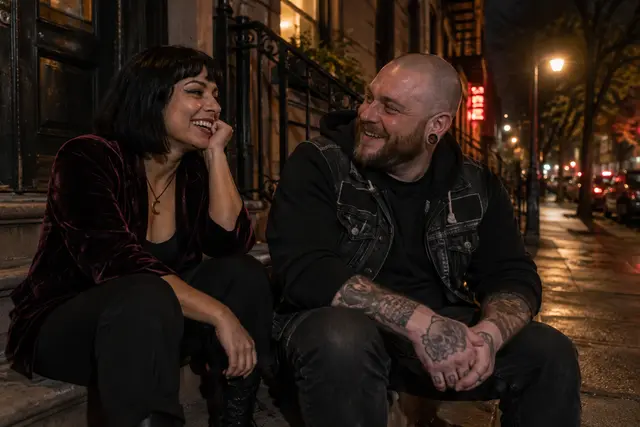
Make Online Friends in Small Chat Rooms

Big feeds can feel like screaming into a fog machine. Small chat rooms are different: fewer people, less performance, more room for the kind of odd little comment that turns into a real friendship.
That is the fresh angle right now. People are still looking for connection online, but they are also tired of endless scrolling, huge servers and chats where nobody remembers your name. Pew Research Center reported in 2026 that some Americans are finding community online, even while many still doubt how genuine online connections can be. Google also noted a 2026 rise in searches around real-life connection, like local run clubs and walking clubs, which says a lot: people want the internet to lead somewhere warmer than another lonely tab. (pewresearch.org)
Why small chat rooms hit different
A huge online space can be exciting. It can also feel like standing outside a venue after the show, hearing six conversations at once, and somehow joining none of them.
Small rooms make friendship easier because they lower the noise. You can actually remember that Raven likes doom metal, Jules is rebuilding a battle jacket, and someone named Ash has been trying to dye their hair silver without turning it swamp-green. That is how online people stop being usernames and start being people you check in on.
This matters because adult friendship is having a strange era. AARP’s 2026 friendship research found that most adults see friendship as essential and many are open to making new friends, while younger adults report more isolation and lack of companionship than older adults. At the same time, the APA’s 2026 Stress in America report noted that nearly half of AI users said they had used AI conversation like a friend. No shame in wanting something to answer at 2 a.m., but human weirdos still hit different. (aarp.org)
The small-room method for making online friends
The goal is not to become “popular” in a chat room. Please, no. The goal is to become familiar in a good way.
Think of it like becoming a regular at a tiny goth night. You do not walk in, grab the mic, and announce your full backstory. You show up, vibe, compliment someone’s boots, remember a name, and slowly become part of the furniture. Fancy furniture. Maybe velvet. Probably covered in cat hair.
1. Pick rooms with an actual mood
The best room is not always the busiest room. Look for a room with a clear vibe:
- late-night “can’t sleep” energy
- music sharing
- goth, emo, punk, metal or grunge talk
- local scene chatter
- outfit advice
- horror, games or weird art
- “say hi and hang out” rooms
On Alt Chat, Night Chats work well for this because some rooms are always open, like “Can’t sleep,” “Hello” and “A/S/L · IM Me,” and people can start 24-hour rooms too. That gives you options: casual hellos, night owl spirals, or a temporary room around a mood.
If you want a deeper guide to spaces with a darker vibe, check out goth chat rooms. If your peak social battery happens after midnight, late-night chat for night owls is your bat signal.
2. Enter like a person, not a press release
A lot of people freeze because they think they need the perfect first line. You do not. A room is not a job interview with eyeliner.
Good small-room entrances are simple:
- “Hey, what’s everyone listening to?”
- “I’m new here. Any darkwave recs?”
- “Rate my current situation: making tea at 1:14 a.m. and pretending I’ll sleep soon.”
- “Anyone else fixing their sleep schedule by making it worse?”
- “I need one song for a gloomy walk. Give me your best.”
Bad entrances usually demand too much too fast:
- “Nobody ever talks to me.”
- “Who wants to be my best friend right now?”
- “DM me, I’m bored.”
- “Why is this room dead?”
The first group invites people in. The second group makes people feel assigned homework.
3. Respond to specifics
Here is the easiest friendship cheat code: respond to one specific thing someone said.
If someone says they are making a playlist, ask what the mood is. If they mention a show, ask how the crowd was. If they post a fit, compliment one detail instead of tossing out a generic “cool.”
Try:
- “The chain detail on that jacket is sick.”
- “You said gloomy but danceable. Are we talking darkwave or sad synth-pop?”
- “That sounds like a brutal shift. Are you decomposing on the couch now?”
- “You mentioned moving cities. Have you found any local shows yet?”
Specific replies show you are not just waiting for your turn to monologue. They also make it easier for the other person to answer.
Need backup lines? Steal ideas from conversation starters for goths and alt people, then make them sound like you.
How to be memorable without trying too hard
You do not need a “brand.” You need a tiny pattern.
Maybe you are the person who always asks for one song before bed. Maybe you post a Friday fit check. Maybe you rate everyone’s terrible sleep decisions with dramatic vampire council energy. Maybe you are quietly kind and remember when someone had an exam, shift, gig or bad week.
Small rooms reward consistency. Not constant availability. Just enough presence that people think, “Oh, cool, they’re here.”
Build tiny rituals
Friendships often start with repeatable little things:
- “song of the night?”
- “fit check Friday”
- “one win, one fail”
- “show us your current craft project”
- “what are we avoiding doing?”
- “drop a photo of your pet, plant or cursed thrift find”
These are low-pressure because nobody has to reveal their whole soul. They can just share a song, a joke, a photo or a mood.
On Alt Chat, profiles can have an Anthem, so a profile song can become an easy conversation starter. “Your Anthem is sick” is smoother than “Hello stranger, please summarize your entire personality.”
Let people be different kinds of social
Some people talk in paragraphs. Some drop one perfect sentence and vanish like a cryptid. Some lurk for days, then suddenly recommend the exact album you needed.
Do not treat quiet people like they are doing friendship wrong. A small room feels safe when nobody is punished for having a low-social-battery day.
You can make space with lines like:
- “No pressure to answer fast.”
- “Lurkers welcome.”
- “I’m slow replying but I’m around.”
- “That’s okay, we can keep it light.”
That kind of energy is rare, and people remember it.
Turning chat into actual friendship
At some point, a good chat room friendship needs a little more shape. Not a giant leap. Just a few small bridges.
Move from group chat to one-on-one slowly
If you have talked in the room a few times, a private message can be normal. Keep it tied to the shared context.
Try:
- “Hey, you mentioned that band earlier. Sending you the album I meant.”
- “I didn’t want to derail the room, but your jacket project is so good.”
- “You seem cool. Want to trade playlists?”
Avoid intense openers. Do not pour out your whole heartbreak, ask for constant attention, or act like one good conversation means you are now bonded for life. Friendship needs oxygen.
Make a tiny plan
Online friendship gets stronger when there is something to return to.
Examples:
- “Let’s compare playlists tomorrow.”
- “If you watch that horror movie, report back.”
- “Next time you dye your hair, I need updates.”
- “Same room tomorrow night?”
Tiny plans are better than vague “we should talk sometime” energy. They make the next message easier.
If you are trying to meet more alt people in general, how to meet alternative people online has more ideas for turning digital sparks into real connection.
Safety without killing the vibe
Safety does not have to make you paranoid. It just keeps the chat fun instead of weird in the bad way.
Use the same rule you would use outside a show: friendly does not mean available for anything. You can be kind and still have boundaries.
Keep these green flags in mind
Good online friends usually:
- respect slow replies
- do not pressure you for photos or personal details
- keep jokes playful, not cruel
- accept “no” without a debate
- talk in the room as well as in DMs
- show interest in your taste, not just your attention
- make you feel relaxed after chatting
Watch for red flags
Step back if someone:
- pushes for private info fast
- asks for money or gifts
- gets jealous of your other chats
- guilt-trips you for not replying
- keeps turning every topic sexual
- wants secrecy right away
- ignores your boundaries
Keep your location, workplace, daily routine and private accounts to yourself until trust is real. If you plan to meet someone offline later, use public places, tell a trusted person where you are going, and leave if the vibe turns bad. For more practical basics, read online dating safety tips; most of those habits also apply to new online friendships.
What if nobody replies?
It happens. Sometimes the room is sleepy. Sometimes people are busy. Sometimes your perfect joke was too powerful and everyone needed a minute to recover. That is what we tell ourselves, and honestly, it helps.
Do not take one dead chat as proof that you are bad at people. Try again at a different time, in a different room, with a simpler opener. Ask a question that is easy to answer. Reply to someone else first. Share a song, a tiny story, or a harmless opinion like “silver jewelry beats gold with black outfits” and let chaos bloom.
Also, give yourself permission to leave rooms that do not feel good. You are not required to win over every corner of the internet. Find the room where your kind of weird makes sense.
A better goal than “find my people”
“Find my people” sounds huge. Like you need to locate a perfect chosen crew by Friday or the moon explodes.
Try a smaller goal: find one person you like talking to this week. One person who gets your joke. One person who sends a song back. One person who remembers you were nervous about something and asks how it went.
That is how online friendship actually grows. Not from shouting into the biggest crowd, but from showing up in a small room, being a little brave, being decent, and letting the right people recognize you.
The internet can feel massive and cold. A good small chat room feels like a corner booth where someone saved you a seat.
FAQ
How do I make online friends without being awkward?
Start small: reply to one thing someone said, ask an easy question, and come back later if the chat is still active. You do not need a perfect opener; steady, kind presence does more than one dramatic entrance.
Are small chat rooms better for making friends?
Small chat rooms can feel easier because people actually notice each other. Big rooms are fun for energy, but smaller rooms make it simpler to remember names, follow up and build inside jokes.
What should I say in an alt chat room?
Try music, outfits, shows, horror movies, tattoos, thrift finds, pets or “what are you listening to right now?” Keep it light at first, then go deeper when the other person seems comfortable.
How can I stay safe while making online friends?
Keep personal details private until trust builds, move slowly and trust weird vibes. If someone pressures you, love-bombs you, asks for money or tries to isolate you, step back and use the block or report tools.