Third Places for Alt People: Finding Your Weird Corner
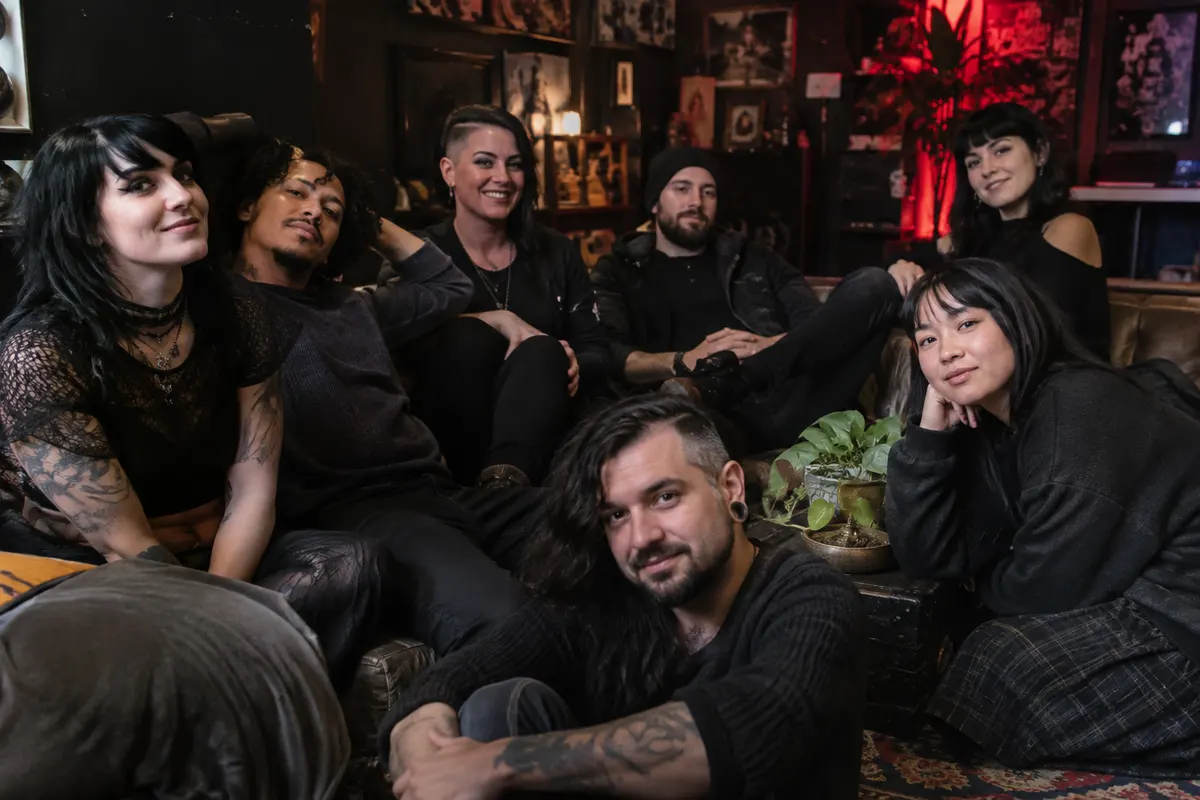
A lot of alt loneliness is not about being impossible to understand. It is about having nowhere easy to go where your eyeliner, battle jacket, black lipstick, shaved brows, dyed hair, band tee, or quiet little vampire vibe makes sense without a full explanation.
That is why “third places” are having a moment. People are searching for ways to make friends offline again, but for goth, emo, punk, metal, grunge, scene, and other alternative people, the question has a sharper edge: where do you go when the normal hangout spots feel too bright, too expensive, too crowded, or just not yours?
What third places mean for alt people
A third place is a spot that is not home and not work or school. It is the extra place where you become a regular, bump into familiar faces, and slowly stop feeling like you are floating through life by yourself.
For alt people, a third place might be:
- A small venue with local bands
- A record shop that hosts listening parties
- A library horror club or zine night
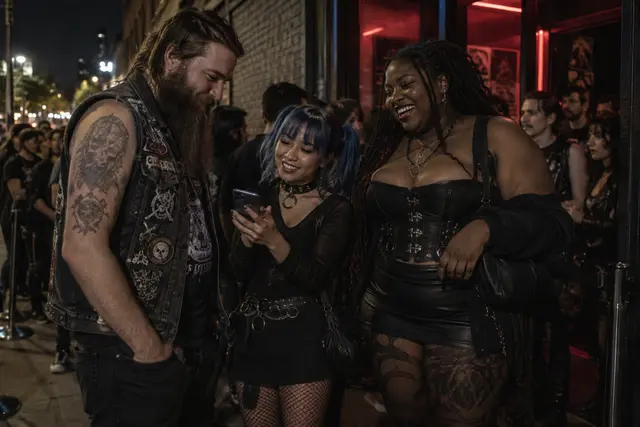
- A late-night diner after a show
- A tattoo flash event
- A goth, industrial, emo, punk, or metal night
- A community art space
- A gaming café or comic shop
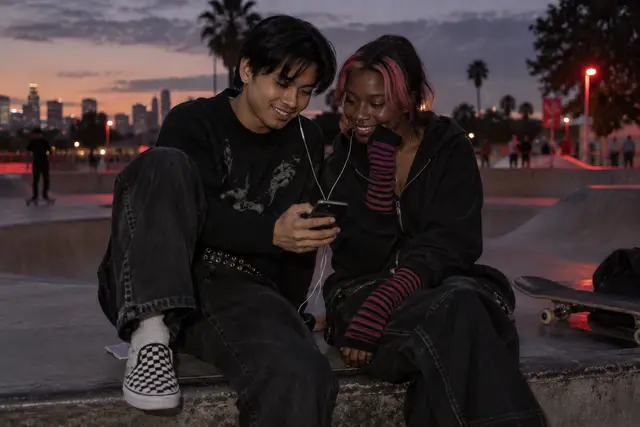
- A public park where people meet before a concert
- An online room that actually feels alive
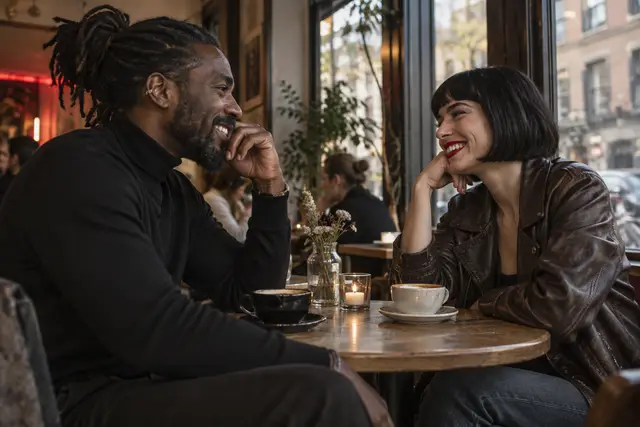
The point is not that the place looks perfect on camera. The point is repetition. You go once, then again, then again. Eventually someone says, “I’ve seen you here before,” and suddenly the world is slightly less cold.
This is not just an alt thing. Google reported in 2026 that people were increasingly searching for in-person connection, with “walking club” hitting a 10-year high and “run club” reaching all-time high search interest. That does not mean everyone has to become a sporty daylight creature. It means people are hungry for low-pressure reasons to gather. (blog.google)
Why it feels harder now
If making friends as an adult feels weirdly difficult, you are not broken. A lot of casual social structure has gotten thinner. Axios reported in 2026 on how loneliness and the erosion of third places are colliding, with gathering spaces becoming less available, less accessible, or harder to use without spending money. (axios.com)
For alt people, that can hit in extra-specific ways:
- The one decent club night is once a month.
- The venue you liked closed or changed format.
- Your small town has shows, but none that feel like your scene.
- Public spaces exist, but you do not feel welcome lingering there.
- Everything costs money, including “casual” hangouts.
- Online spaces are active, but not always deep.
- You are tired of being the only visibly alt person in the room.
And then there is the emotional part no one wants to say out loud: going alone can feel brutal. Not because you are weak. Because walking into a room full of strangers takes guts, especially when your style already makes you feel visible.
Pew Research Center’s October 2026 report on online community found that many Americans are finding community online during a time when social ties and loneliness are major concerns. That matters for alt people, because online spaces can be a real bridge, not a fake substitute, if they help you find people who share your taste, humor, schedule, and weird little obsessions. (pewresearch.org)
Stop looking for the perfect scene
One trap is waiting for the perfect goth club, the perfect friend group, the perfect punk house, the perfect emo night, the perfect dark café full of mysterious people reading poetry under red lights.
Would that be nice? Obviously. We would all like a dramatic fog machine entrance into our destined friend circle.
But real community usually starts messier:
- One person you talk to after a show
- One group chat that is not dead
- One local vendor who remembers you
- One chat room where people are awake when you are
- One monthly event that is only half your vibe, but close enough
- One friend-of-a-friend who also hates small talk
If you recently moved, start with the practical hunt: venue calendars, record shops, tattoo studios, art markets, campus-area flyers, horror screenings, DIY spaces, and local band pages. The guide to finding the alt scene in a new city is a good next read if you need a search plan instead of vague encouragement.
“Adjacent” spaces count
Your third place does not have to be officially goth, emo, punk, or metal. Sometimes the best spots are scene-adjacent:
- Horror book clubs
- Figure drawing nights
- Zine fairs
- Open mics
- Board game nights
- Queer community events
- Vintage markets
- Art walks
- Local film screenings
- Volunteer shifts at animal shelters or mutual aid events
The trick is to look for shared energy, not matching outfits. A person in hiking clothes at a horror trivia night might still be the one who knows every darkwave deep cut. A quiet person at a library craft event might have a death metal playlist that could level a building.
The “show up twice” rule
Going once is research. Going twice is a signal.
The first time you go somewhere, your brain may be too busy yelling “everyone can tell I am alone” to notice much else. The second time, you know where the door is, what the room feels like, and where to stand when you need a minute. That tiny familiarity matters.
Try this low-pressure plan:
- Pick one place or event that seems tolerable, not perfect.
- Go once with a tiny goal: stay 30 minutes, buy a zine, hear one band, say one sentence.
- Go again within a few weeks.
- Notice who else repeats.
- Compliment something specific: a patch, pin, shirt, makeup look, book, or playlist choice.
- Leave before you are totally drained.
You are not trying to become the main character of the venue in one night. You are teaching your nervous system that the room is survivable.
If concerts are your easiest entry point, how to make friends at concerts has more practical tips for talking to people without acting like a networking goblin.
Use online spaces as a bridge, not a bunker
Online community is real. Anyone who says otherwise has never stayed up too late talking to strangers who somehow understand your exact favorite sad album, your outfit crisis, and your hatred of fluorescent lighting.
But online spaces work best when they give you momentum, not when they become the only place you exist.
Use them to:
- Find local shows and meetups
- Ask where people actually hang out
- Start tiny conversations before an event
- Share music and photos
- See who is active in your city or region
- Practice being visible before showing up offline
On Alt Chat, people can meet nearby or worldwide, hang out in Night Chats, post in the Realm, add an Anthem to their profile, and find others who actually like the same strange corners of culture. That kind of space can make the first “hey, are you going to this?” feel less random.
If late-night rooms feel more your speed, emo chat rooms covers how online hangouts can help when your social battery comes alive after everyone else has gone to sleep.
Keep it safe and sane
If you are meeting someone from online, keep it public, tell a trusted person where you are going, and do not let anyone rush you into a private situation. A real friend will not be offended by basic safety.
For more detailed basics, read online dating safety tips. Even if you are looking for friends, not dates, the same common-sense rules help.
What if you are “too much” or “not enough”?
A lot of alt loneliness comes with a nasty little voice attached.
It says you are too quiet, too loud, too old, too new, too casual, too intense, too dressed up, not dressed up enough, too online, too awkward, too late to the scene, too different from the people you want to meet.
That voice is boring. It has one joke.
You do not need to pass a scene purity test to deserve community. You do not need encyclopedic band knowledge, perfect makeup, rare vinyl, handmade everything, or a tragic backstory. You can be new. You can be shy. You can be rebuilding. You can be figuring out what you like in real time.
Alt culture is at its best when it gives people room to become more themselves, not when it turns into a velvet-rope contest.
Building your own tiny third place
Sometimes the spot does not exist yet. Annoying, yes. Also powerful.
You do not have to start a full club night. Start smaller:
- A monthly horror movie meetup at a public theater
- A park hang before a show
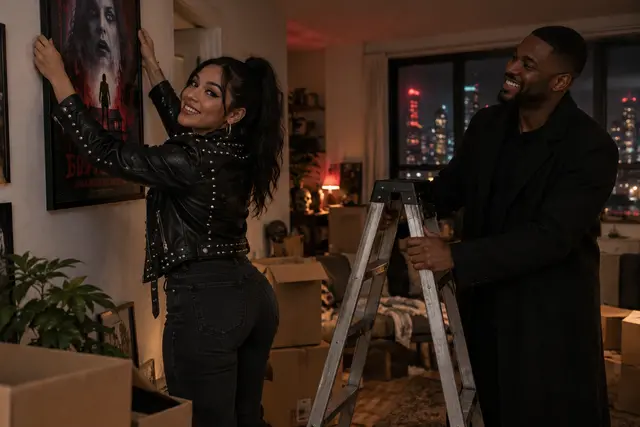
- A “bring a craft” table at a café
- A record listening night with three people
- A local group chat for alt adults
- A thrift trip meetup
- A low-key photo walk
- A “going to this show alone, anyone else?” post
The best tiny third places have three things:
- A clear reason to show up. Music, films, outfits, books, crafts, games, food, walking, whatever.
- A repeat rhythm. Weekly, monthly, every first Friday, after every local show.
- A low-pressure vibe. People can talk a lot, talk a little, or just exist nearby.
Friendship often needs repeated, ordinary contact. AARP’s 2026 friendship research found that adults widely see friendship as essential, while also feeling the tension between easy digital contact and wanting more genuine connection. That lines up with what many alt people already know: a like is nice, but being recognized by someone in the room hits different. (aarp.org)
When loneliness gets heavy
There is a difference between “I need more people” and “I am scared of being alone with my thoughts.” If loneliness starts turning into thoughts of self-harm, tell someone you trust or contact a local crisis line; in the U.S., you can call or text 988.
You deserve support before things become unbearable. You do not have to make it look cool.
For the regular heavy kind of lonely, the kind where weekends feel too long and group photos online feel like tiny knives, try not to demand a whole new life overnight. Pick one repeat place. One person to message. One event to attend. One room to enter. One small proof that you still belong somewhere.
The real goal: familiar faces
Your first win is not a best friend. It is a familiar face.
Someone who nods at you across the room. Someone who remembers your profile song. Someone who says, “You made it.” Someone who sends you a flyer because they thought it looked like your thing.
That is how community starts. Not with a perfect chosen family montage. With tiny moments of recognition stacked over time.
Third places for alt people are not always handed to us. Sometimes we have to search harder, stay softer than we want to, and make the weird little corner ourselves. But once you find even one place where you can show up as you are, the map changes.
The world gets a little less random. The night gets a little warmer. And your people stop feeling imaginary.
FAQ
What is a third place?
A third place is somewhere you spend time that is not home and not work or school. For alt people, that could be a record shop, venue, café, library event, chat room, park meetup, art night, or any spot where you can show up more than once and start recognizing faces.
How do I find third places for alt people near me?
Start with local venue calendars, record stores, tattoo studios, libraries, art markets, goth nights, punk shows, metal shows, and community boards. Search social platforms for your city plus words like goth, emo, punk, metal, darkwave, industrial, alternative, or DIY.
What if there is no alt scene where I live?
Look for adjacent spaces first: horror movie nights, open mics, art markets, book clubs, gaming events, thrift swaps, and small shows. Online spaces can also help you meet people nearby before making low-pressure plans in public.
How do introverts make alt friends without feeling awkward?
Pick repeat spaces where you can ease in slowly, like a weekly chat room, monthly show, library event, or hobby group. You do not have to become instantly social; showing up regularly and making one small comment is enough to start.