Friendship Recession for Alt People: Why Everyone Feels Hard to Reach
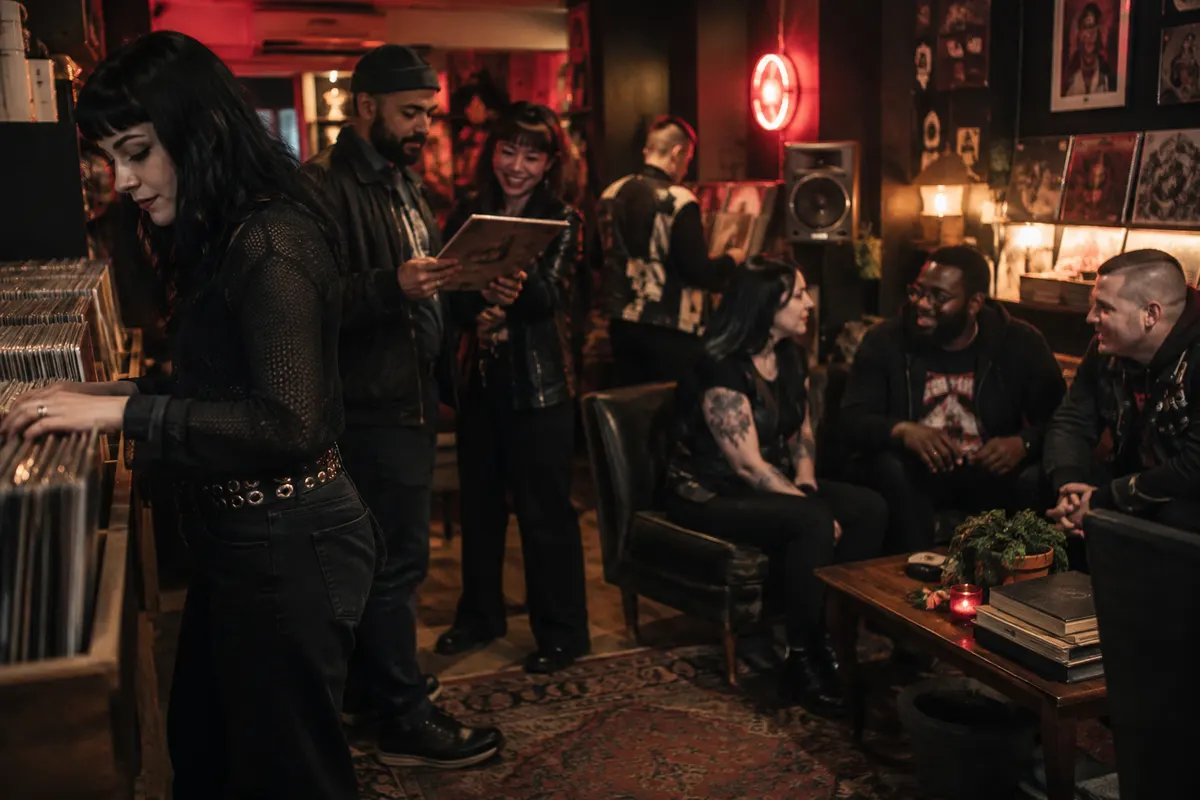
The friendship recession is not just a headline. It is that weird little ache when you want a crew, but everyone feels busy, tired, far away or trapped behind a screen.
For alt people, it can hit extra hard. When your taste, style or music already makes you feel like the odd one out, losing easy everyday friendship spaces can make the whole world feel like a waiting room with bad lighting.
Why “everyone is hard to reach” is the mood right now
People are searching for connection in a big way. Google’s 2026 trend write-up pointed to rising interest in offline social stuff like run clubs, walking clubs and local group activities, which says a lot: people are not only bored, they are hungry for places to belong. (blog.google)
Pew Research Center also reported in October 2026 that many Americans are finding some community online, while still carrying doubts about how genuine internet connection can feel. That tension is basically the whole group chat era in one sentence: we can talk to anyone, but still wonder who would actually notice if we disappeared for a week. (pewresearch.org)
AARP’s 2025 friendship research found that most adults see friendship as central to a happy and healthy life, and that many are open to making new friends. So if you feel awkward for wanting new people, you are not needy. You are human. (aarp.org)
The frustrating part is that openness does not always turn into plans. You can like someone’s post for six months and still never grab coffee. You can see the same person at shows and never get past “cool jacket.” You can have 800 mutuals and still eat noodles alone at midnight.
That is the friendship recession in real life: not zero people, just not enough steady people.
Why it can feel sharper when you are alt
Being goth, emo, punk, metal, grunge, scene or otherwise alternative can be beautiful. It can also make casual connection harder in ordinary spaces.
If you are the only black-clad person at work, you might be friendly all day but never fully seen. If you live in a small town, the nearest alt night might be a long drive. If you are older than the crowd at the local show, you might wonder if you missed your window. You did not, by the way.
Alt people often build friendship through shared signals:
- The patch on your jacket.
- The band tee someone actually recognizes.
- The eyeliner compliment in a gas station bathroom.
- The person who knows why your profile song matters.
- The stranger at a show who helps you find your dropped earplug.
Those little sparks matter. But sparks need oxygen. A single cool interaction is nice; repeated contact is what turns it into a friendship.
That is why third places matter so much. They give you a reason to see the same people again without making it a dramatic “friend date” every time.
Social media is not the same as being held by a scene
No shame to the timeline. We all need somewhere to post the fit, the cat, the dramatic sky, the playlist, the tiny crisis about bangs.
But passive social media can trick your brain. It gives you updates without intimacy. You know someone changed their hair, moved apartments and started listening to darkwave, but you have not actually talked to them since spring.
A 2026 Oregon State University write-up on adult social media connection described research suggesting that having more social media connections does not automatically make people feel less lonely. That does not mean online friendship is fake. It means scrolling near people is not the same as being known by them. (health.oregonstate.edu)
So the question is not “online or offline?” It is “active or passive?”
Active connection looks like:
- Asking a real question.
- Remembering what someone told you.
- Showing up again.
- Moving from comments to conversation.
- Inviting someone into a low-pressure plan.
- Joining a space where people talk, not just perform.
That is why smaller rooms can feel better than huge feeds. In Alt Chat, Night Chats are live group rooms where alt people can talk in real time, and anyone can start a 24-hour room. A small room can feel less like shouting into a stadium and more like sliding into a booth with people who get the vibe.
The “cool person paralysis” problem
Here is a very specific alt curse: seeing someone you think is cool and immediately becoming a haunted statue.
You want to say, “I like your boots.” Instead, your brain says, “If I speak, I will explode into bats.”
This is extra common when you have spent years feeling judged. You start judging yourself before anyone else can. You decide they already have friends. You decide they will think you are weird. You decide your outfit is not good enough, your music taste is not deep enough, your social skills are cursed.
Try shrinking the moment. You are not asking someone to become your lifelong friend under a blood moon. You are making a tiny bid for connection.
Good tiny bids:
- “That jacket rules. Did you make the patches yourself?”
- “I’ve been meaning to check this place out. Do they do stuff like this often?”
- “Your playlist pick is so good. Are you into more post-punk or darkwave lately?”
- “I’m trying to get out more. Is there another night around here you like?”
A bid is not a trap. If they seem busy, cool, you let it go. If they light up, you have a thread to follow.
How to rebuild friendship without forcing a whole new personality
You do not need to become a hyper-social extrovert with a color-coded calendar. You just need a few repeatable moves.
1. Pick one “same time, same place” thing
Friendship grows faster when people can predict seeing you again. Choose one thing you can actually repeat:
- A monthly goth night.
- A local punk show spot.
- A comic shop event.
- A record store hang.
- A café where alt people seem to gather.
- A regular online chat room.
- A walking group, art class or volunteer shift with people who seem kind.
You do not have to talk to everyone the first time. Just become a familiar face. Familiar becomes approachable.
2. Stop waiting to be adopted by a friend group
The fantasy is nice: you walk into a venue, a mysterious crew sees your eyeliner, and they instantly say, “You belong with us.”
Sometimes that happens. Usually, adults are just standing around wondering if they look weird holding their tote bag.
Instead of waiting for a whole group, start with one person. One person is enough. One person can introduce you to another person. A scene is built one conversation at a time.
If shows are your easiest entry point, this guide on making friends at concerts has the same basic truth: be kind, be aware of space, and do not treat every interaction like a test.
3. Send the slightly brave message
Friendship often dies in the gap between “we should hang” and an actual plan.
Make the message simple:
- “Hey, I liked talking with you at the show. Want to check out another one sometime?”
- “You mentioned that record shop. I’m going Saturday afternoon if you want to browse.”
- “No pressure, but I’m trying to meet more alt friends nearby. Want to grab coffee next week?”
“No pressure” should mean no pressure. If they do not reply, do not spiral into a courtroom drama inside your head. People miss messages. People get tired. People are messy. Try someone else.
4. Make the first hang short
A three-hour dinner can feel intense with someone new. A 30-minute coffee, a quick record browse, a short walk before a show, or a chat room hang is easier.
Short plans help everyone relax. If the vibe is good, you can extend it. If it is not, you both escape with dignity and your boots intact.
5. Build a friendship web, not a single lifeline
One person cannot be your whole scene. That is too much pressure for both of you.
Try building a loose web:
- One person you message about music.
- One person you see at shows.
- One person you talk to late at night.
- One person who likes fashion swaps.
- One person who shares memes so cursed they become art.
Online spaces can help with this, especially if your local scene is tiny. If emo is your lane, emo chat rooms can be a low-pressure way to find people who already speak that language.
What if you feel behind?
You are not behind. You are just starting from where you are.
Some people have old friend groups from school. Some have partners who came with a built-in crew. Some live in cities with five club nights a week. Some have none of that and still deserve connection.
The Social Connection in America project reported in 2026 that loneliness remains a major concern, with many people reporting moderate to severe loneliness. So if everyone around you seems booked, beloved and busy, remember: a lot of people are quietly wishing someone would invite them too. (socialconnectioninamerica.org)
That does not erase the sting. It just means the sting is not proof that you are unlikable.
If the loneliness ever gets so heavy that you feel unsafe with yourself, tell someone you trust, or contact a local crisis line. In the U.S., you can call or text 988.
Make connection easier to accept
Here is a sneaky part of loneliness: after a while, being invited can feel suspicious.
You wanted connection, then someone offers it, and suddenly your brain says:
- “They are just being polite.”
- “I will ruin the vibe.”
- “I have nothing interesting to say.”
- “They will leave once they know me.”
That voice is not a prophecy. It is fear wearing eyeliner.
Practice saying yes to small things. Practice replying before you overthink for three days. Practice believing compliments. Practice letting people like the version of you that exists right now, not the imaginary upgraded version who has perfect hair, perfect confidence and a flawless social life.
You can also make your online profile easier to connect with. On Alt Chat, every profile can have an Anthem, a YouTube music video that plays on the profile. That tiny song choice can give someone an easy opener: “I love that track,” “I saw them live,” or “Give me three more songs like this.” Sometimes friendship starts with a button press and a shared chorus nobody has to quote.
The quiet win: becoming reachable
You do not have to fix the whole friendship recession. You just have to become a little more reachable, and look for people who are doing the same.
Reachable does not mean available 24/7. It means warm enough to approach. Honest enough to say, “I’m trying to get out more.” Brave enough to send the message. Gentle enough to let things grow slowly.
Alt community has always been made from scraps: flyers, basements, thrifted clothes, borrowed eyeliner, late-night rides, forum threads, zines, shows, chats, and people finding each other in places that did not make room for them before.
That is still happening. Maybe not exactly like it used to. Maybe not as automatically as we wish. But the door is not closed.
Somewhere, another person is standing in the same weird glow, hoping someone cool says hi first. It can be you. It can be them. Best case, it becomes both.
FAQ
What is the friendship recession?
The friendship recession is a casual phrase people use for the way adult friendships can feel harder to make and maintain now. It can mean fewer close friends, less time together, or feeling like everyone is too busy, tired or online to really connect.
Why is it hard to make alt friends as an adult?
Alt scenes often gather around shows, clubs, shops and online spaces, so it can feel tough if you live far from those places or have a packed schedule. It also takes repeated low-pressure contact to turn “cool person I saw once” into an actual friend.
Can online friends be real friends?
Yes. Online friends can be real friends when there is care, consistency and mutual respect. The trick is to avoid endless passive scrolling and look for spaces where people actually talk back.
How do I reach out to someone without seeming weird?
Keep it simple and specific. Mention something you genuinely have in common, ask a low-pressure question, and give them room to reply when they can.