A Short History of Punk Subculture: From CBGB to Today
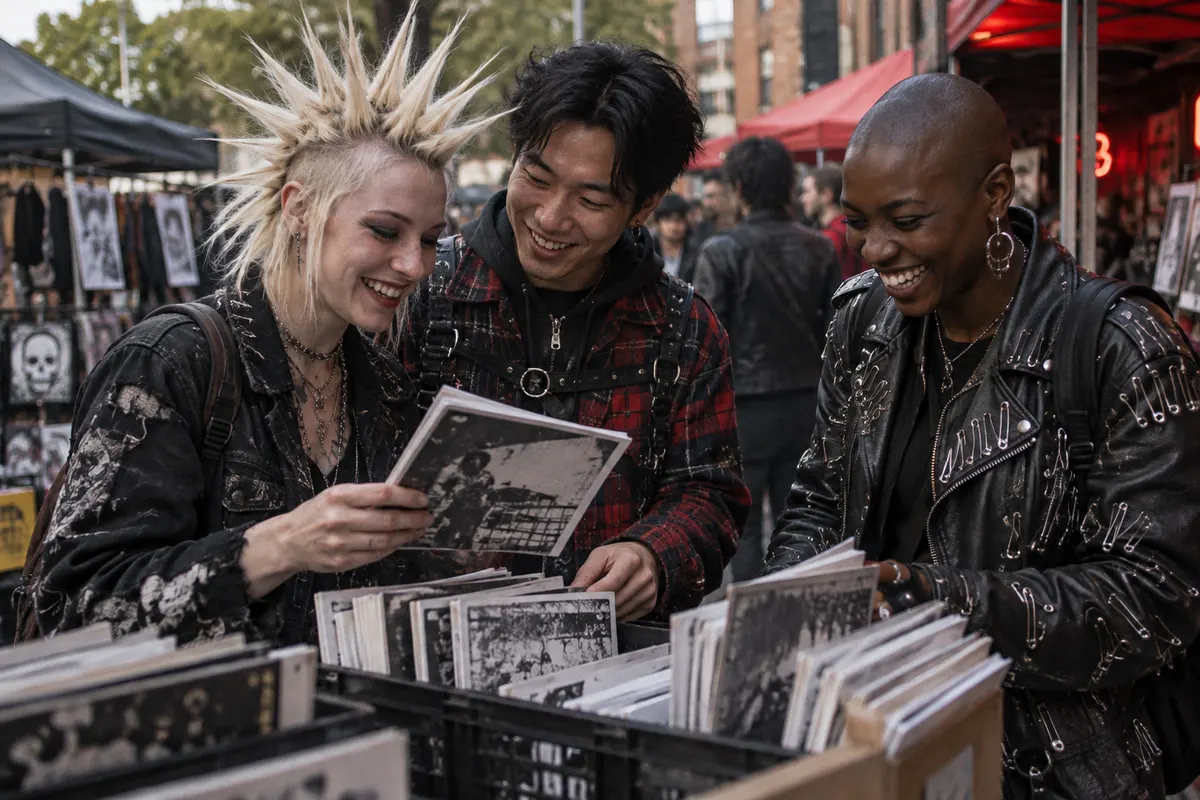
Three chords, a ripped shirt and a lot of nerve. That's the cartoon version of punk, and it's not totally wrong. But the punk subculture is also one of the most creative, generous and influential scenes ever, and it shaped everything from goth to emo to how indie bands release music today.
Here's a short, friendly history of where punk came from, how it spread and why it's still kicking.
Before punk: the late 1960s and early 1970s
Punk didn't come from nowhere. A handful of loud, raw bands set the stage in the years before.
- The Stooges, from Michigan, with Iggy Pop's wild live shows.
- MC5, from Detroit, loud and political.
- The Velvet Underground, from New York, dark, arty and noisy.
- The New York Dolls, glam, trashy and fun.
They had attitude and volume, and they were nothing like the long, polished rock that was big at the time.
New York, mid-1970s: CBGB
In the mid-1970s, a small club in Manhattan's Bowery called CBGB became home to a new scene. The bands sounded very different from each other, but they shared a stripped-down, do-it-yourself approach.
- Ramones played short, fast, catchy songs and wore leather jackets and ripped jeans. Their first album came out in 1976 and became a template for punk.
- Patti Smith mixed poetry and rock on Horses (1975).
- Television, Blondie and Talking Heads came through the same scene.
London, 1976–1977
Across the Atlantic, punk took a sharper, more confrontational shape.
The Sex Pistols were managed by Malcolm McLaren, who ran a King's Road shop with designer Vivienne Westwood. That shop helped create the punk look: bondage trousers, safety pins, ripped and slogan-covered clothes. The band's only studio album, Never Mind the Bollocks, Here's the Sex Pistols, came out in 1977.
The Clash brought politics and reggae influences, and later made the classic London Calling (1979). Siouxsie and the Banshees, The Damned and Buzzcocks all came out of the same moment.
DIY becomes the point
Buzzcocks released their Spiral Scratch EP themselves in 1977, which inspired lots of others to do the same. Fanzines like Sniffin' Glue were made with a typewriter and a photocopier. The message was simple: you don't need permission or a record deal. Just make the thing.
That idea is probably punk's biggest gift to the world.
The look
Punk fashion was cheap, homemade and meant to grab attention:
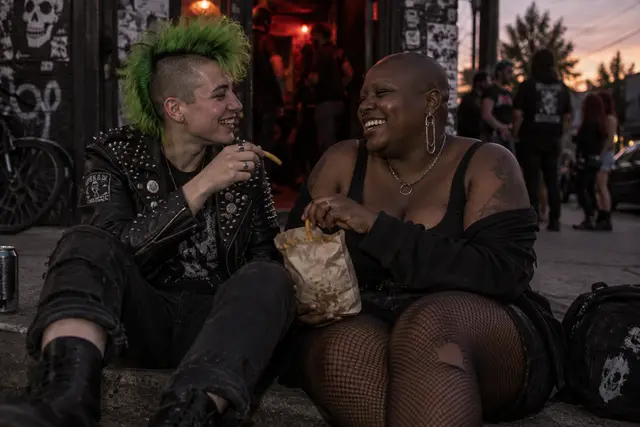
- Leather jackets covered in studs, paint and patches
- Safety pins, chains and ripped shirts
- Mohawks, liberty spikes and bright dyed hair
- Combat boots and creepers
- Tartan and bondage trousers in the UK scene
Most of it was made or customized by hand. A jacket was a personal art project, and still is.
After the first wave: post-punk and goth
By the late 1970s, many bands wanted to keep punk's freedom but try darker, stranger sounds. That became post-punk: Joy Division, Siouxsie and the Banshees, The Cure, Public Image Ltd (John Lydon's band after the Sex Pistols) and Bauhaus. From there grew goth rock and the goth scene. Read more in our guide to post-punk bands.
Hardcore: early 1980s America
Around 1980, US punk got faster, shorter and more intense. That was hardcore.
- Black Flag in Southern California, who toured endlessly and ran their own label, SST.
- Bad Brains in Washington, D.C., who mixed blistering hardcore with reggae.
- Minor Threat, also in D.C. Their song "Straight Edge" gave its name to a movement of punks who chose not to drink or use drugs.
- Dead Kennedys in San Francisco, with sharp political satire.
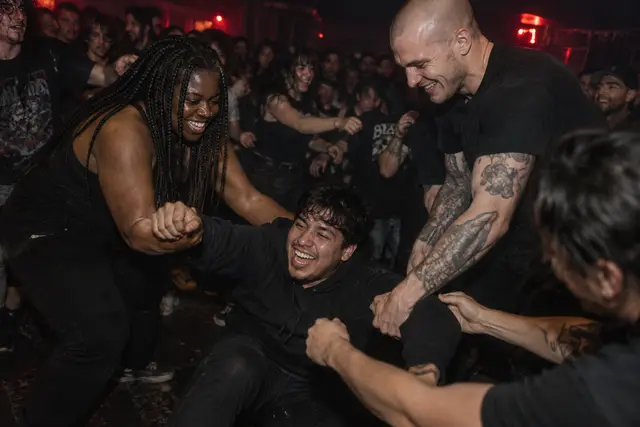
D.C.'s Dischord Records, co-founded by Ian MacKaye, became a model for running a small, ethical independent label. Hardcore also gave us the modern mosh pit. Our mosh pit etiquette guide covers how to enjoy it safely.
Anarcho-punk and crust
In the UK, Crass pushed punk toward anarchism, pacifism, DIY living and fierce politics. Anarcho-punk inspired crust punk, which mixed hardcore with metal heaviness and grew into a global underground scene.
The late 1980s: all-ages DIY spaces
As clubs got harder to book, punks made their own spaces. 924 Gilman Street in Berkeley, California, opened in the 1980s as a volunteer-run, all-ages venue and became one of the most famous DIY spaces in the world. Basement shows, community centers and squats played the same role in cities everywhere.
Riot grrrl: early 1990s
In Olympia, Washington, and Washington, D.C., women in the scene pushed back against the macho side of punk. Bikini Kill, Bratmobile and Heavens to Betsy led a movement of loud music, feminist zines and girls to the front at shows. Riot grrrl's DIY zine culture still inspires people today.
The 1990s: punk goes big
In 1994, Green Day's Dookie and The Offspring's Smash sold millions, and suddenly punk was on MTV. Labels like Epitaph and Fat Wreck Chords grew, and skate punk and ska punk took off. The Warped Tour started in 1995 and became a summer tradition for punk, pop-punk and emo fans for decades. It brought a lot of people into alt music, and plenty of our readers will remember it. If that's you, take a look at our pop-punk dating guide.
Emo, pop-punk and the 2000s
Punk's emotional side grew into emo, first in the D.C. scene of the mid-1980s and later into the big 2000s wave. Pop-punk filled malls and radios. Hardcore kept going underground, mixing with metal into metalcore. For the emo side, see what is emo.
Punk today
Punk never really went away. Today you can find:
- Hardcore bands like Turnstile and Knocked Loose reaching big festival stages.
- UK and Irish bands like Idles and Fontaines D.C. (more post-punk) packing venues.
- Endless DIY scenes, basement shows, zines and tiny labels around the world.
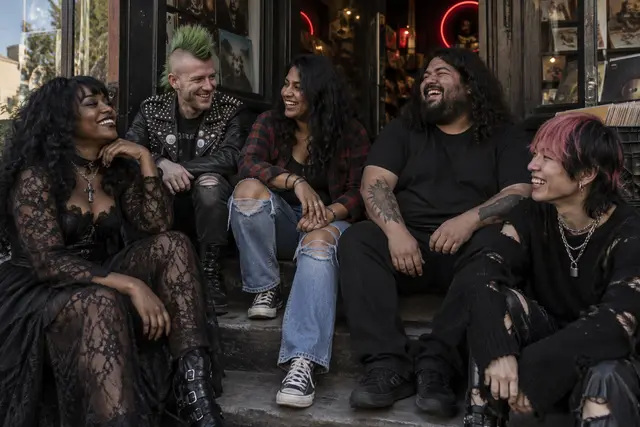
- Queer, trans and BIPOC-led punk scenes keeping the welcoming, anti-bigotry spirit alive.
The look has changed and the bands have changed, but the core idea hasn't. Make your own stuff, look out for each other and don't wait for permission.
Why punk still matters
Punk taught a lot of people that they could start a band, print a zine, book a show or build a scene without anyone's approval. That idea runs through goth, emo, metal, indie and much of internet culture. If you're looking for people who share it, try a local show, a zine fair, or an alt community like Alt Chat. And if you meet someone cute by the merch table, our punk dating guide has you covered.
FAQ
When did punk subculture start?
Punk took shape in the mid-1970s, with New York's scene around CBGB and London's scene around bands like the Sex Pistols and The Clash. Earlier bands like The Stooges, MC5 and the New York Dolls laid the groundwork.
What are the main values of punk?
Do it yourself, question authority, and look after your community. Many punk scenes are also strongly anti-racist, anti-sexist and welcoming to outsiders of every kind.
What is the difference between punk and hardcore?
Hardcore is a faster, more intense style of punk that grew in the US around 1980, with bands like Black Flag, Minor Threat and Bad Brains. It also built its own DIY labels, venues and the straight edge movement.
Is punk still a subculture today?
Yes. DIY shows, zines, small labels and local scenes are still going strong around the world, and new bands keep reinventing the sound.