Hardcore Show Etiquette Checklist: Are You Pit-Ready?

Hardcore is having a very loud mainstream moment, which means a lot of people are walking into their first basement show, VFW hall, club room, or festival side stage with no idea what the pit is about. Good. New people keep scenes alive — as long as everyone learns the unwritten rules before becoming a human ceiling fan with main-character disease.
This hardcore show etiquette checklist is for first-timers, returning elders with suspicious knees, metalheads crossing over, punks bringing a friend, and anyone who wants the night to feel intense without turning into a parking lot argument.
Why hardcore show etiquette is suddenly a bigger deal
Hardcore has always had its own gravity: small rooms, big feelings, pile-ons, stage dives, two-stepping, singalongs, flyers, zines, merch tables, and that one person who somehow knows every local opener. What feels new is how many people are arriving from outside the old show circuit.
Knocked Loose earned a 2025 Grammy nomination for “Suffocate” with Poppy in Best Metal Performance, while Turnstile won the 2026 Grammy for Best Metal Performance with “BIRDS.” That kind of visibility pulls curious fans toward heavier rooms, even if they learned the band from a clip, a friend’s playlist, or a festival lineup instead of a local floor show. (grammy.com)
At the same time, writers and fans have been talking more about rough crowd behavior, high ticket prices, and people missing the communal point of the pit. The FADER called out a post-pandemic shift where some crowds seem less socialized into concert etiquette, especially outside DIY spaces. (thefader.com)
That does not mean new fans are the problem. It means scenes need clearer maps. Nobody is born knowing where to stand during a pile-on or how to avoid whacking a photographer with a boot. You learn by watching, asking, messing up a little, apologizing, and getting better.
Hardcore Show Etiquette Checklist: Are You Pit-Ready?
Check every item that feels true for you. No gatekeeping, no gold stars from a crusty clipboard goblin — just a quick read on how ready you are for the room.
What your checklist score actually means
This is not a purity test. It is not a “real hardcore kid” license. It is more like a pre-show mirror check, except instead of asking “does this vest look cursed in a cool way?” it asks “will I accidentally ruin someone’s night?”
Low score: start as a watcher
If you checked only a few items, your best move is to observe first. Stand to the side, near the back, or by a wall with a clear exit path. Watch where the pit opens, where the safer edges are, and how the crowd treats each other.
You can still have a perfect night. Nod like a villain in a fog machine. Support the opener. Buy a shirt. Learn the rhythms. The pit will still be there when you are ready.
Middle score: you know enough to be useful
A middle score usually means you understand the basics: help people up, don’t target anyone, keep your shoes tied, and don’t argue with security or venue staff. Nice. You are already ahead of the person filming vertically with one arm while holding a full cup in the other like a doomed wizard.
Your next level is reading the room. A metallic hardcore band with spin kicks is not the same as a pop-punk chorus bounce. A tiny DIY space is not the same as a barricaded festival stage. The rule is simple: match the room, not your fantasy.
High score: pit goblin with manners
If you checked most items, you are probably the person who picks someone up before their glasses hit the floor. You know that chaos works best when it has care underneath it. You also know when to sit one out, which is the most underrated skill in heavy music.
Your job is not to police everyone. Your job is to model the vibe: move hard, watch corners, make space, and help confused newcomers without acting like a haunted gym teacher.
The five golden rules of hardcore show etiquette
1. Pick people up immediately
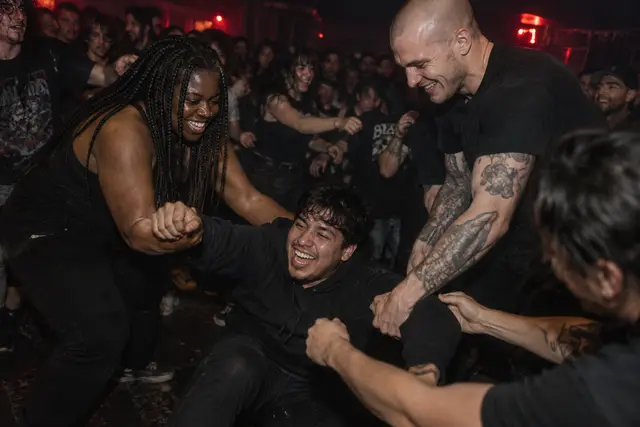
This is the rule with no debate. If someone falls, the pit pauses around them. Grab an arm, make eye contact if you can, and help them up. If they look hurt, wave people back and get staff or a friend.
The pit is not a video game. People have knees, glasses, piercings, old injuries, and jobs tomorrow.
2. The edge is not consent
Standing near the pit does not mean someone agreed to be a target. The edge is often full of people watching, guarding friends, protecting bags, taking a breather, or deciding if they want in.
If someone is facing away, holding a phone carefully, carrying merch, or clearly bracing with anxious eyes, do not launch into them. Hardcore is physical, but “I hit whoever was nearby” is lazy behavior wearing a tough outfit.
3. Learn the difference between movement and menace
Two-stepping, push moshing, circle pits, pile-ons, stage dives, and crowd killing all have different local expectations. Some rooms love wild dancing. Some rooms shut it down fast. Some shows have a pit that looks like a blender full of boots; others are mostly singalongs and shoulder bumps.
Before you join, watch one full song. Who is moving? Where are they aiming? Are people smiling after impact or glaring? Is the crowd making space or shrinking away? The answers matter.
If you want a deeper pit-specific refresher, read Mosh Pit Etiquette: How to Have Fun and Stay Safe, then come back and pretend you knew all of it already.
4. Stage diving is not a trust fall into strangers who never agreed
Stage diving can be iconic. It can also be a boot to someone’s face because the diver never checked the landing zone. If the venue allows it and the crowd is ready, aim for packed, alert bodies with hands up — not gaps, smaller people minding their business, photographers, or the one person tying a shoe.
Also: empty pockets. Nobody needs your keys, phone, wallet chain, or mystery lighter raining down like cursed confetti. For more detail, see Stage Diving Etiquette: Crowd Surf Without Being a Menace.
5. Support the whole show, not just the viral band
Hardcore scenes survive because people show up early, watch the locals, buy merch, respect the space, and do not treat the venue like a disposable content backdrop. The opener might be your future favorite band. The person running sound might also play drums in three projects. The person at the door might be the reason the gig exists at all.
If you came because a big band crossed your feed, cool. Now meet the ecosystem.
First hardcore show tips that save the night
Wear the boring shoes
This is not the night for loose platforms, slick soles, or boots you have not broken in. Wear something that stays on and lets you move. Tie your laces tight. If your footwear requires a whispered prayer, save it for a goth night with dramatic corners.
Bring ear protection
Earplugs are not weak. Earplugs are how you still hear the snare, your friends, and future gossip. Keep a spare pair if you can. Someone always forgets.
Keep your phone out of the way
Take a quick clip if you want. Then put it away. A hardcore set is better when you are present, and your phone is terrible at protecting its own screen from airborne elbows.
If you are filming from the edge, keep your arms close and do not block the view for a full song. The people behind you paid to see the band, not your glowing rectangle performing a solo.
Know your exits and your reset spots
Before the first band starts, clock the bathroom, water spot, merch area, and exit path. This is not paranoid. It is basic show wisdom. If you get overwhelmed, overheated, or separated from friends, you will know where to go instead of spinning in place like a confused bat.
Do not make the pit your dating strategy
Flirting at shows can be cute. Targeting someone in the pit because you think they are hot is nightmare behavior. If you want to meet people, talk between sets, compliment a patch, ask about a band, or use Alt Chat to connect with metal, punk, goth, emo, and other alt people before the gig.
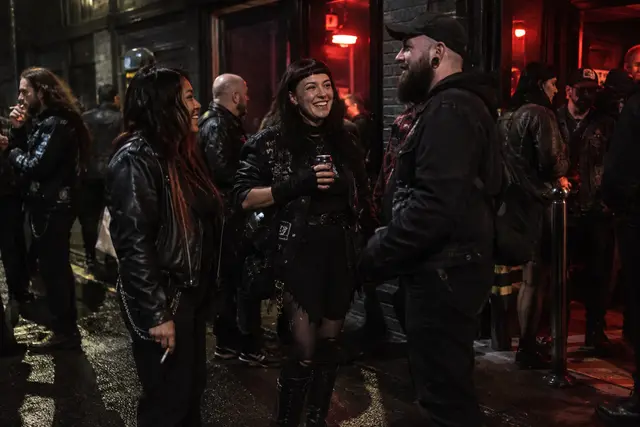
For actual show-friend skills, How to Make Friends at Concerts is your gentle little field manual.
Hardcore etiquette for different zones in the room
| Zone | What it means | Best behavior |
|---|---|---|
| Front center | Singalongs, pile-ons, high contact | Keep moving, protect heads, do not camp if you hate contact |
| Pit center | Dancing, pushing, impact | Watch your limbs, avoid targeting, help fallen people fast |
| Pit edge | Mixed zone, semi-risky | Brace, stay alert, do not shove people who are out |
| Side wall | Breathers, watchers, photographers, bags | Respect space, do not drag people in |
| Back of room | Low contact, social, safer view | Great for first-timers and tired legs |
| Merch area | Band support zone | Do not crash into tables or block lines forever |
The smartest people move around. They go hard for one song, drink water, watch a set from the side, then return when their favorite breakdown arrives like a tax notice from hell.
A quick word on crowdkilling
Crowdkilling is one of the most argued-about parts of heavy show culture because expectations vary wildly by scene, band, venue, and crowd. Some hardcore rooms expect aggressive dancing near the pit. Other crowds see random edge hits as hostile, especially at mixed-genre shows.
If you are new, do not make crowdkilling your first language. Learn the room first. If a show has a clear style and you choose to participate, keep it controlled, keep it in the active space, and never aim at someone who is not engaged. If your whole personality is “but people should know what they signed up for,” take the Crowdkilling Etiquette Quiz and let the bats judge you.
Bringing a friend to their first hardcore show
Do not toss your friend into the front like a sacrifice to the breakdown gods. Give them a tiny briefing:
- “If someone falls, we help.”
- “If you want out, tap my shoulder and we move.”
- “The side is fine. You do not have to prove anything.”
- “If we split up, meet by the merch table after the set.”
- “If a stage diver comes over, arms up or step back early.”
Also, check in without hovering. Some people discover their inner pit gremlin in three songs. Others prefer to watch from the back and absorb the chaos like a stylish gargoyle. Both are valid.
The real point: intensity with care
Hardcore show etiquette is not about making loud music polite. Nobody is asking the breakdown to use an indoor voice. The point is that the room works because people choose awareness inside the chaos.
The best hardcore crowds feel dangerous for the right reasons: the volume, the speed, the release, the shared pressure valve of everyone yelling at once. They do not feel dangerous because one person decided basic empathy was “soft.”
Go hard. Wear the patched vest. Two-step like your skeleton has a side quest. Sing the words you know and fake the rest with confidence. Just keep one eye on the people around you, because the pit is only magic when everyone gets to walk out of it with a story instead of a grudge.
FAQ
What is hardcore show etiquette?
Hardcore show etiquette is the set of unwritten rules that keeps a loud, physical show fun instead of miserable. It means picking people up, reading the room, respecting the edge of the pit, not targeting anyone, and supporting the bands and venue.
What should I know before my first hardcore show?
Bring ear protection, wear shoes that stay on, hydrate, and stand farther back for a song or two before jumping in. Watch how the room moves, then choose your level: side watching, two-stepping, singing up front, or staying completely out of the pit.
Is it okay to go to a hardcore show alone?
Yes. A lot of people go solo, especially to smaller gigs, and you can keep it simple: say hi in line, compliment a patch, or ask which band people came to see. If online chat feels easier first, make a plan with a friend from your scene and meet in a public spot.
What should you not do in a hardcore pit?
Do not target random people, swing into the edge on purpose, shove people who clearly opted out, or keep filming while blocking everyone. If someone falls, help them up; if someone looks hurt, make space and get attention fast.