Crowdkilling Etiquette Quiz: Are You Pit-Aware or a Menace?
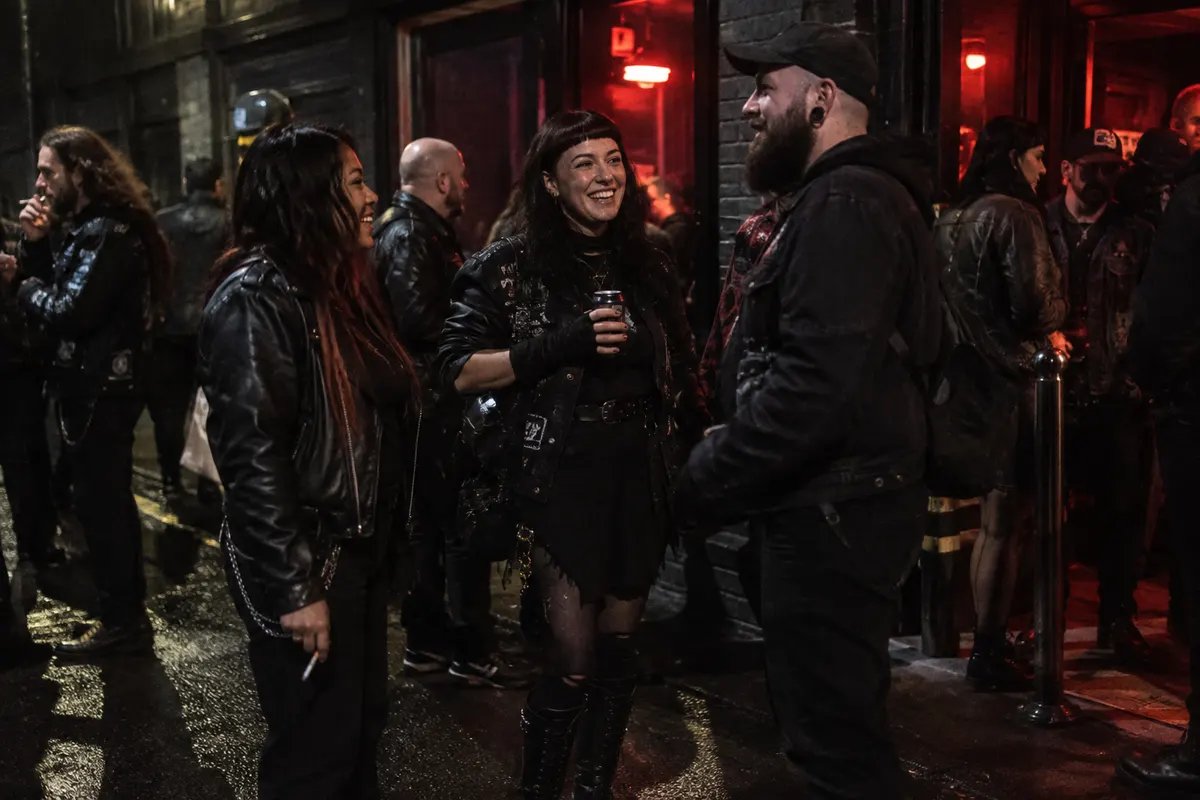
The pit is supposed to feel wild, not predatory. If the room has blast beats, two-step parts, punk chaos or breakdowns that sound like a folding chair hitting a haunted garage, your job is not to become a human lawsuit with merch.
Crowdkilling etiquette is having a moment because fans are talking more openly about the difference between intense crowd energy and careless violence. Searches around mosh rules and mosh etiquette have spiked in recent years, and crowd safety professionals have also flagged “crowd killers” as an emerging issue in some heavy scenes. (themusic.com.au)
Crowdkilling Etiquette Quiz: How Pit-Aware Are You?
Answer like you are actually at the show: sweaty, excited and standing near someone’s battle vest. Your score tells you if you are pit-safe, pit-curious or one breakdown away from getting side-eyed by the whole room.
1The pit opens right next to you. What is your first move?
2Someone falls in front of you during a fast part. You…
3A breakdown hits and you want to hardcore dance. What matters most?
4You are at the edge and a person clearly does not want pit contact. You…
5Crowd surfer incoming above your head. Your best response?
6You notice someone swinging into people outside the pit. You…
7Your hearing protection plan is…
8You are exhausted but the next song is your favorite. What now?
9A friend wants to enter their first pit. You tell them…
10What does “read the room” mean at a heavy show?
Why crowdkilling etiquette matters right now
Metal, punk and hardcore have always had physical crowd traditions. Circle pits, push pits, stage dives, crowd surfing, two-stepping, windmills and walls of death all come from different scenes with different expectations. The problem starts when someone brings the wrong energy to the wrong room, or worse, stops caring who gets hit.
A packed show is not one big consent slip. The person in the pit may want contact. The person one row back, holding merch and guarding their glasses like a tiny cathedral window, may not. The shorter fan near the edge, the disabled fan, the person recovering from an injury, the first-timer, the photographer, the friend trying to leave — they are not bonus targets.
A crowd safety guide published in 2025 describes crowd killers as people who appear to intentionally wound others under the cover of moshing, often using elbows, knees, kicks, headbutts or spinning fists. That is a very different thing from a regular mosh pit, where rough contact happens but the basic deal is shared movement, quick recovery and looking out for people. (cdn.wildapricot.com)
If you want a broader pit foundation first, start with mosh pit etiquette or take the concert etiquette quiz for metal and punk shows. This one is narrower: it is about your radar, your control and your ability to not become the reason someone posts a furious parking-lot rant at 1:13 a.m.
Crowdkilling vs. moshing: the clean difference
Here is the easiest test:
| Move | Usually okay when… | Not okay when… |
|---|---|---|
| Push pit | People are actively pushing back and staying upright | You shove people outside the pit or into barriers |
| Circle pit | The lane is clear and people can exit | You drag in bystanders or cut through packed edges |
| Two-step | There is space and scene context for it | You swing blind into people who are not participating |
| Crowd surf | The venue allows it and the crowd is ready | You kick, film yourself, or launch into unprepared people |
| Stage dive | The room expects it and security allows it | You jump into a dead zone and flatten strangers |
| Hardcore dancing | It fits the bill, the room and the space | You turn the entire floor into your personal boss fight |
Crowdkilling etiquette is not “stand still and be polite forever.” This is not a library with double-kick drums. It is about understanding that different shows have different floor languages.
At a street punk gig, the pit might be bouncy and chaotic, with people slamming shoulders and grinning like goblins. At a deathcore show, you may see hardcore-style movement during breakdowns. At a doom show, the heaviest thing in the room may be emotional fog and one person nodding so slowly they look like a cursed metronome. Same black T-shirts, different rules.
That is why watching first is powerful. Give yourself one song. Look for:
- Where the pit naturally opens.
- How big the edge is.
- How security reacts.
- If the crowd catches surfers.
- If people pick up fallen fans fast.
- If hardcore dancing is expected or annoying everyone.
- If the room skews tiny DIY, big festival, all-ages, seated, packed, or loose.
A pit-aware person reads the room before entering it. A menace decides the room must read them.
What your quiz score means
This quiz is not measuring how tough you are. Toughness is cheap. Awareness is hotter.
0–7: Balcony Goblin in Recovery
You may be newer to heavy shows, returning after a long break, or still sorting out the difference between “the floor got rough” and “someone is being reckless.” That is fine. Everybody starts somewhere, and honestly, asking questions already puts you ahead of the dude who thinks elbows count as personality.
Your best move: stand near the back or side for a few songs, watch the flow, and learn the room. If you want pit time, enter from the edge, keep your head up and leave before you get exhausted. Also, do not treat online clips as the full rulebook. A viral ten-second breakdown does not explain the culture around it.
8–15: Edge Scout
You have decent instincts. You probably know to pick people up, avoid the barricade crush, and move if the pit opens under your boots. Your main growth area is timing. The edge is not neutral territory; it is where people get clipped when someone overcooks a spin kick or when a surge hits from behind.
Practice the “three-point scan”: floor, shoulders, ceiling. Floor for fallen stuff and fallen people. Shoulders for incoming bodies. Ceiling for crowd surfers and stage divers. You will feel like a tiny security camera in eyeliner, but it works.
16–22: Pit Citizen
You are the person every heavy room needs. You can have fun without turning into a danger Roomba. You know that pit culture is communal, not just individual release, and you probably have a sixth sense for when a circle pit is about to open like a goth portal.
Your next level is helping without grandstanding. Point toward dropped glasses. Make a quick lane for someone leaving. Tap a shoulder and gesture when a surfer is coming. If someone is escalating, tell a friend, move away or flag security instead of trying to star in a parking-lot sequel.
23–30: Circle Pit Diplomat
You are basically pit infrastructure with better boots. You read the room, protect the edge, know when not to jump in and can tell the difference between a rowdy scene moment and someone being a problem.
Your danger is overconfidence. Even skilled fans can misread a room when tired, dehydrated or way too emotionally bonded with the riff. Stay humble. Heavy scenes need veterans who model the culture, not veterans who act like everyone else should have downloaded the same pit manual in 2009.
The five rules of not being That Person
1. The edge is not the pit
The edge is where people choose their level of chaos. Some are watching. Some are resting. Some are protecting friends. Some got stuck there because the floor shifted. If your move requires strangers outside the pit to absorb the impact, it is not pit energy. It is poor aim with confidence.
2. Pick people up immediately
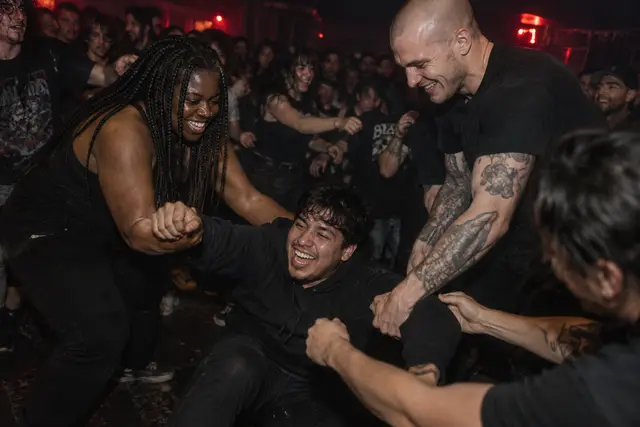
This is the oldest rule because it is the best one. If someone falls, the pit changes shape around them. Hands out, space opens, person gets up, show continues. A good pit almost looks choreographed for half a second: chaos, pause, rescue, chaos again.
3. Control your limbs
Hardcore dancing can be part of the culture at the right show, but control is the entire point. If you cannot tell where your elbows, fists, knees or boots are going, you are not dancing; you are outsourcing consequences to strangers.
4. Know the difference between contact and targeting
Contact happens in pits. Targeting is when someone aims at a person, keeps going after nonparticipants, swings into the edge, follows someone who backed out, or uses the pit as cover for anger. The first is part of the show. The second gets people hurt.
5. Protect your hearing like it is part of your battle vest
Concerts and sporting events can hit the 94–110 dBA range, and loud sound can damage hearing faster as volume rises. The National Institute on Deafness and Other Communication Disorders recommends hearing protection in loud settings like concerts, and notes that high-fidelity earplugs can reduce intensity while keeping music clearer. (nidcd.nih.gov)
The CDC also found that many U.S. adults support venue actions like warning signs and hearing protection when amplified music reaches potentially hazardous levels. Earplugs are not “uncool.” Ringing ears as a permanent souvenir is the bad merch table. (cdc.gov)
If you are new, go in like a respectful goblin
First heavy show? Beautiful. Welcome to the room where everyone looks scary and half the crowd will help you find a lost phone with the intensity of a medieval search party.
Try this plan:
- Start on the side. You can see the pit without getting fed to it.
- Watch one full song. Learn the floor’s rhythm before entering.
- Secure your stuff. Glasses strap, zipped pockets, no loose chains ready to become tiny medieval weapons.
- Make an exit plan. Know where the open space is.
- Enter from the edge. Do not sprint through people like a haunted shopping cart.
- Leave before you are cooked. Tired people make sloppy choices.
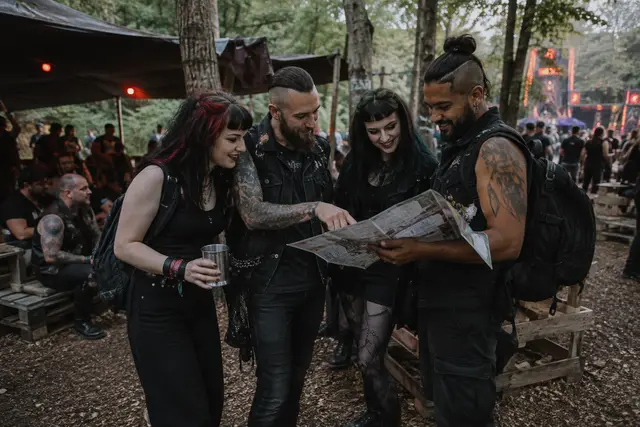
If you are going solo, the metal festival survival guide has practical packing and pacing tips. If you are trying to meet other heavy music people before a show, Alt Chat has rooms and profiles where you can find metalheads, punks and other alt folks without explaining why your ideal evening includes blast beats and comfortable shoes.
If someone is crowdkilling near you
Do not play hero just because the breakdown got personal. Your safety matters too.
- Move away early. Pride is not worth a cracked tooth.
- Protect your head and face. Turn your body, keep your arms up without swinging back.
- Help others exit. A quick hand signal or shoulder tap can do a lot.
- Tell security or staff. Especially if someone is targeting people or ignoring boundaries.
- Do not escalate alone. Group awareness beats one-person revenge theater.
If you are with friends, make a simple plan before the set: “If it gets weird, we meet by the back-left wall.” Not sexy. Very useful. Also a great test of friendship; anyone who remembers the meeting spot after three openers deserves fries.
Pit culture is scene culture
Every heavy genre has its own etiquette dialect. Metal subgenres alone can shift the crowd vibe hard: doom, thrash, death metal, black metal, metalcore and deathcore do not always move the same way. If you want the genre map, the metal subgenres explained guide helps decode why one crowd is windmilling and another is standing still like elegant ravens at a funeral.
The shared thread is care. Punk and metal scenes survive because people pass down tiny rules: pick them up, share water when you can, move back if someone needs out, warn people when a surfer is coming, do not harass people, respect the venue, tip the merch table if you are able, and do not make the floor worse for everyone around you.
Crowdkilling etiquette is not about draining the danger out of heavy music. The danger is part of the spark: the volume, the bodies, the release, the feeling that the room is turning into weather. The line is simple. Wild is welcome. Careless is boring. Cruel is done.
Your best pit self is intense, aware and generous. Boots planted. Eyes open. Earplugs in. Ready for the riff, not hunting for a victim.
FAQ
What is crowdkilling at a concert?
Crowdkilling usually means someone is using hardcore-style movement to hit people who did not agree to be part of it, especially people standing outside the pit. Crowd safety guidance describes crowd killers as people who seem to intentionally wound others under the cover of moshing. ([cdn.wildapricot.com](https://cdn.wildapricot.com/333778/resources/Documents/Field_Guide_SecondEdition_APRIL_2025.pdf.pdf?Key-Pair-Id=K27MGQSHTHAGGF&Policy=eyJTdGF0ZW1lbnQiOiBbeyJSZXNvdXJjZSI6Imh0dHBzOi8vY2RuLndpbGRhcHJpY290LmNvbS8zMzM3NzgvcmVzb3VyY2VzL0RvY3VtZW50cy9GaWVsZF9HdWlkZV9TZWNvbmRFZGl0aW9uX0FQUklMXzIwMjUucGRmLnBkZj92ZXJzaW9uPTE3NDQ5Nzk5OTUwMDAiLCJDb25kaXRpb24iOnsiRGF0ZUxlc3NUaGFuIjp7IkFXUzpFcG9jaFRpbWUiOjE3NzA1OTY3MDB9LCJJcEFkZHJlc3MiOnsiQVdTOlNvdXJjZUlwIjoiMC4wLjAuMC8wIn19fV19&Signature=DOPPZOiGADHP~ZmuASNNpZlYIyhUNuiXc-avlVd4JFSsjcJmHw6ElkzV48a4dRPehDKQ93ZcHvXwSVrQN8MDCR7Mv-W4w481VJCjCKkO4bprQnklv1375B8POERCb~R7ETzPNVFZ2lnNHa5H7VnqV9E-tBnQZhVlkyrmFFtbq2MWURfXbsBUX7k5FivseRQK0cL9oNlqUwYeoTERvYE~UnY2B9kuzjnctieg6XXIEnXQyDC1yA6ukDGcPmwO8vE6aPFqYV6w2eb2mAOo~RwHKmg-rX68CwXUxodrI-2GH~CtYegx2uWiwJSdpvVNeRUCyJ7q55LbBBYPd0~xL9O08g__&version=1744979995000))
Is crowdkilling the same as moshing?
No. Moshing is rough, sweaty and physical, but it works best when people share space, help fallen fans and read the room. Crowdkilling crosses the line when someone targets bystanders, swings into the edge or treats the crowd like props instead of people. ([themusic.com.au](https://themusic.com.au/features/unwritten-gig-etiquette-rules-crowd-behaviour/_XtDERATEhU/14-09-26))
What are the basic mosh pit rules?
Pick people up, keep your elbows and fists under control, protect the edges, watch for crowd surfers, and leave if you are too tired or heated to stay aware. Also wear real hearing protection; concerts can reach loud levels where hearing damage becomes a real risk. ([nidcd.nih.gov](https://www.nidcd.nih.gov/health/hearing-protectors))
How do I avoid getting pulled into a pit?
Stand away from the center-front zone, watch where open space starts forming, and move early if you see people backing up or bracing. If you are near the edge, keep your stance solid, help redirect people safely, and ask folks around you to make room if you need out.