Metal Subgenres Explained: From Doom to Deathcore
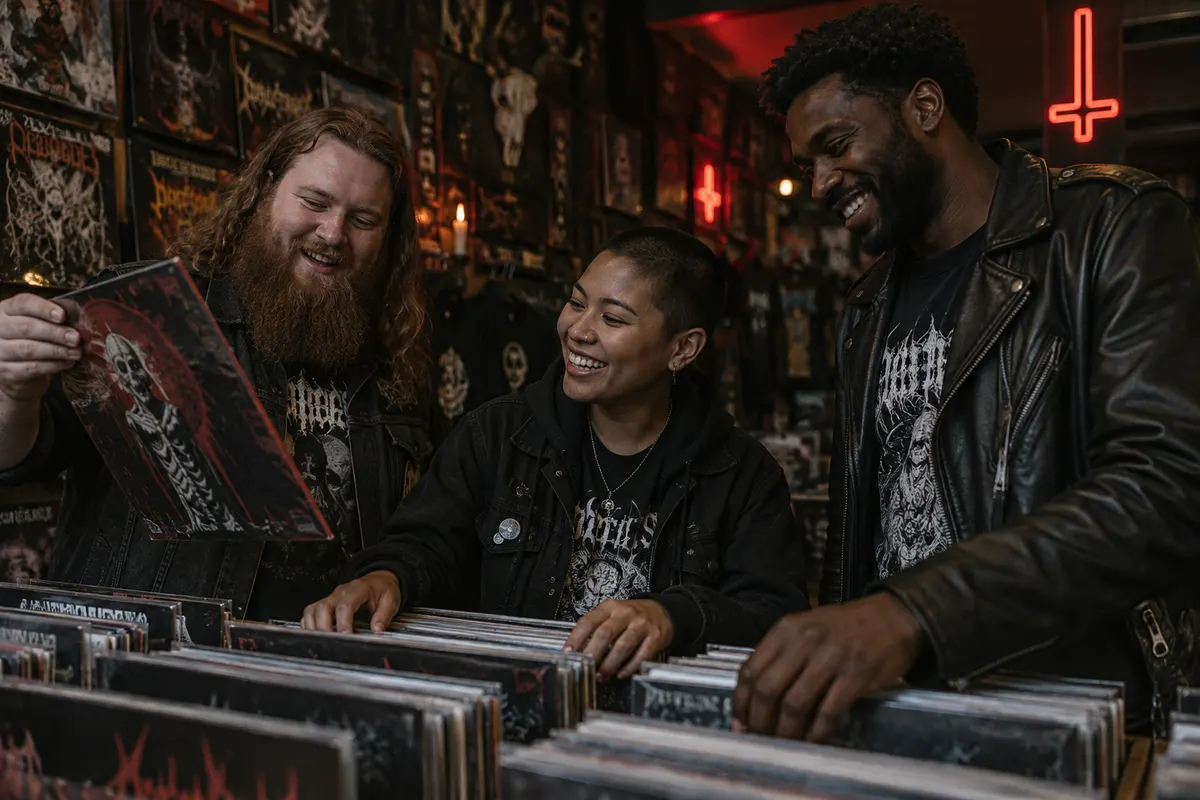
Ask three metalheads to define a genre and you'll get four answers and a friendly argument. Metal subgenres can feel like a maze, but the basic map is simpler than it looks. Most styles grew out of a few big families, and once you know those, the rest falls into place.
Here's a plain-English guide to the main metal subgenres, what they sound like, the bands to know and one album to start with for each.
Heavy metal (the roots)
Sound: Big riffs, strong vocals, guitar solos, and a lot of drama.
Most people trace it back to Black Sabbath, whose first album came out in 1970. In the late 1970s and early 1980s, the New Wave of British Heavy Metal (often shortened to NWOBHM) brought faster, tighter bands like Iron Maiden and Def Leppard, while Judas Priest helped set the leather-and-studs look.
- Bands: Black Sabbath, Judas Priest, Iron Maiden, Motörhead, Dio
- Start with: Iron Maiden, The Number of the Beast (1982)
Doom metal
Sound: Slow, heavy, gloomy. Think giant riffs that feel like they weigh a ton.
Doom takes the slow, dark side of early Black Sabbath and stretches it out. Candlemass gave the style its classic early album, and later bands pushed it in fuzzier or sadder directions.
- Smaller styles: traditional doom, stoner doom, funeral doom (extremely slow), death-doom
- Bands: Candlemass, Pentagram, Saint Vitus, Electric Wizard, My Dying Bride
- Start with: Candlemass, Epicus Doomicus Metallicus (1986)
Thrash metal
Sound: Fast, aggressive riffs, tight drumming and shouted vocals. Built for circle pits.
Thrash took off in the early 1980s, especially in the San Francisco Bay Area. The "Big Four" are Metallica, Slayer, Megadeth and Anthrax. In 1986 alone you got Master of Puppets, Reign in Blood and Peace Sells... but Who's Buying?.
- Bands: Metallica, Slayer, Megadeth, Anthrax, Testament, Kreator, Sepultura
- Start with: Metallica, Master of Puppets (1986)
Death metal
Sound: Low growled vocals, heavily distorted guitars, fast blast beats and complex riffs.
Death metal grew out of thrash in the mid to late 1980s. Florida, especially the Tampa area, became a major center, while Sweden built its own scene with a buzzsaw guitar tone.
- Smaller styles: old-school death metal, technical death metal, brutal death metal, melodic death metal
- Bands: Death, Morbid Angel, Obituary, Cannibal Corpse, Entombed
- Start with: Death, Scream Bloody Gore (1987)
Melodic death metal
The Gothenburg scene in Sweden added catchy guitar harmonies to death metal in the 1990s. It's a friendly entry point if growls are new to you.
- Bands: At the Gates, In Flames, Dark Tranquillity, Arch Enemy
- Start with: At the Gates, Slaughter of the Soul (1995)
Black metal
Sound: Fast tremolo-picked guitars, shrieked vocals, cold, raw production and a lot of atmosphere.
The name comes from Venom's 1982 album Black Metal. Bathory from Sweden pushed the sound further, and the Norwegian "second wave" in the early 1990s defined the style most people picture today.
- Smaller styles: atmospheric black metal, symphonic black metal, blackgaze (black metal plus shoegaze)
- Bands: Bathory, Darkthrone, Emperor, Mayhem, Wolves in the Throne Room, Alcest
- Start with: Emperor, In the Nightside Eclipse (1994), or Deafheaven, Sunbather (2013), if you want something more dreamy
Power metal
Sound: Fast, bright, soaring vocals, big choruses and fantasy themes. The most cheerful corner of metal.
Germany's Helloween shaped the style in the late 1980s. DragonForce's "Through the Fire and Flames" later brought it to a whole generation of rhythm game players.
- Bands: Helloween, Blind Guardian, Sabaton, Stratovarius, DragonForce
- Start with: Helloween, Keeper of the Seven Keys: Part I (1987)
Symphonic and gothic metal
Sound: Orchestras, choirs, keyboards and often operatic vocals, with dark romance in the lyrics.
Gothic metal grew in the early 1990s when bands blended doom metal with goth rock moods. Paradise Lost even called a 1991 album Gothic. Symphonic metal took the big orchestral sound mainstream, especially in Finland and the Netherlands. This is where a lot of goths and metalheads meet. See our guide to goth music genres for the goth side.
- Bands: Type O Negative, Paradise Lost, Tiamat, Nightwish, Within Temptation, Epica
- Start with: Type O Negative, Bloody Kisses (1993)
Sludge and stoner metal
Sound: Fuzzy, groovy, often slow. Stoner is warm and desert-y. Sludge is dirtier and angrier, mixing doom with hardcore punk.
- Bands: Kyuss, Sleep, Melvins, Eyehategod, Mastodon (early on)
- Start with: Kyuss, Blues for the Red Sun (1992)
Grindcore
Sound: Very short, very fast songs mixing extreme metal and hardcore punk. Some last only seconds.
Britain's Napalm Death helped invent it in the 1980s.
- Bands: Napalm Death, Carcass (early), Pig Destroyer, Nasum
- Start with: Napalm Death, Scum (1987)
Industrial metal
Sound: Metal riffs with drum machines, samples and electronic noise.
- Bands: Ministry, Godflesh, Fear Factory, Rammstein
- Start with: Ministry, Psalm 69 (1992)
For the electronic side, check our industrial music guide.
Nu metal
Sound: Down-tuned grooves, hip-hop rhythms, and lots of emotional shouting. Huge in the late 1990s and early 2000s, and very much back in fashion.
- Bands: Korn, Deftones, Slipknot, System of a Down, Linkin Park
- Start with: Deftones, White Pony (2000)
Metalcore
Sound: Metal riffs plus hardcore punk energy, with big breakdowns and a mix of screamed and sung vocals.
- Bands: Converge, Killswitch Engage, Parkway Drive, Architects, Bring Me the Horizon (earlier albums)
- Start with: Killswitch Engage, The End of Heartache (2004)
Deathcore
Sound: Death metal brutality meets metalcore breakdowns. Expect very low growls, high shrieks and drops that make the whole room move.
Deathcore came together in the mid-2000s. It's one of the most popular styles with younger fans today, partly thanks to viral vocal performances.
- Bands: Suicide Silence, Whitechapel, Thy Art Is Murder, Lorna Shore
- Start with: Lorna Shore, Pain Remains (2022)
Progressive metal and djent
Sound: Long songs, odd time signatures and big ideas. Djent is a newer style built on low, choppy, syncopated riffs, named after the sound itself.
- Bands: Dream Theater, Opeth, Mastodon, Gojira, Meshuggah, Periphery, Tesseract
- Start with: Opeth, Blackwater Park (2001), or Gojira, From Mars to Sirius (2005)
Post-metal
Sound: Slow-building, atmospheric songs that swell into huge walls of sound. Think post-rock, but heavier.
- Bands: Neurosis, Isis, Cult of Luna, Russian Circles
- Start with: Isis, Oceanic (2002)
Folk and Viking metal
Sound: Metal with folk instruments, melodies and stories about myths, nature and history.
- Bands: Bathory (later albums), Amon Amarth, Ensiferum, Eluveitie, Korpiklaani
- Start with: Amon Amarth, Twilight of the Thunder God (2008)
How to find your corner
Try one album from each section and notice which ones you replay. If you like melody, try power, symphonic or melodic death metal. If you want heaviness, go to doom, sludge or death metal. If you love atmosphere, try black metal and post-metal.
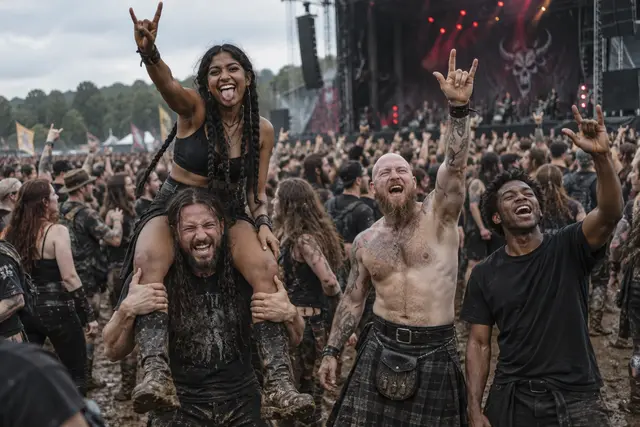
Then go see some live. The best metal festivals put dozens of these styles on one weekend. And when you're ready to find someone to argue about all this with, our guide to metalhead dating is a good next stop. On Alt Chat, your profile song is a quick way to show which corner of metal is yours.
FAQ
How many metal subgenres are there?
There's no official count, because new styles and hybrids keep appearing. Most fans would agree on around a dozen big families, like thrash, death, black, doom, power and metalcore, with lots of smaller styles inside each.
What is the heaviest metal subgenre?
It depends on what you mean by heavy. Grindcore and brutal death metal are usually the most extreme in speed and vocals, while funeral doom is the slowest and most crushing.
What is the difference between death metal and deathcore?
Death metal grew out of the 1980s metal underground and focuses on fast, technical riffs and growled vocals. Deathcore mixes death metal with metalcore and hardcore, so it leans on big breakdowns.
Where should a beginner start with metal?
Start with classic heavy metal like Black Sabbath and Iron Maiden, then try one album from each family below. You'll quickly feel which direction you want to go.