Mosh Pit Readiness Quiz: Are You Pit-Safe?
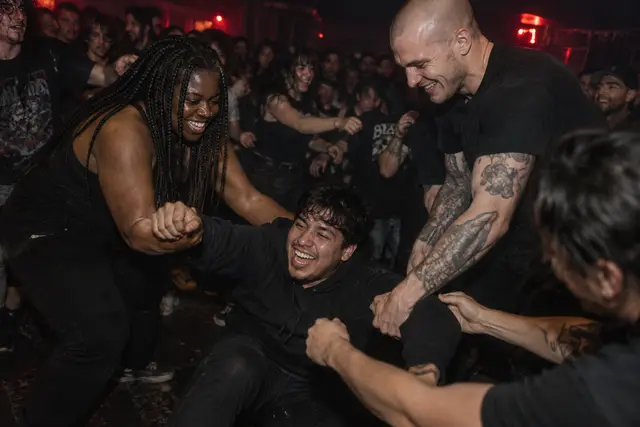
The pit can look like a tornado with boots, denim and bad decisions. But a good metal or punk pit is not supposed to be a free-for-all; it is loud, physical community with rules, signals and a surprising amount of care.
This mosh pit readiness quiz is here for the first-timer hovering near the edge, the veteran who has developed “my knees make vintage hardware noises” energy, and the friend who says “I’m fine” while standing directly in the wall of death path.
Mosh Pit Readiness Quiz: Are You Pit-Safe?
Answer like you are at a real show: loud room, sticky floor, one friend vanished toward merch, and the breakdown is about to make everyone act possessed.
1You arrive at a metal or punk show and see a pit forming. What do you do first?
2Someone falls right in front of you. Your first move?
3Your outfit includes giant sharp spikes and a long chain. Pit plan?
4A friend says they do not want to mosh. You say:
5What is your shoe situation?
6The crowd starts a wall of death. You are not into it. What now?
7How do you handle the edge of the pit?
8You are getting tired mid-set. Your move?
9Someone near you is swinging wildly into people who clearly are not participating. What feels right?
10What is your pre-show plan with friends?
Why mosh pit readiness is the fresh thing to talk about
Mosh etiquette is having a very loud era. Recent conversations online keep circling the same questions: are pits actually safe, are younger crowds missing the old rules, and why does every genre suddenly want a circle pit? Recent fan threads have people asking if metal crowds will help each other, what to do as a first-timer, and why pit styles feel different when moshing moves outside metal, punk and hardcore spaces. (reddit.com)
That makes “readiness” more useful than “are you tough enough?” because toughness is not the point. The best pit people are not always the biggest, loudest or most tattooed. They are the ones who know when to push, when to step back, when to lift someone up, and when the vibe has shifted from fun chaos to “time to become a responsible goblin.”
A pit is also not one universal thing. A punk pit may be fast, loose and bouncy. A metal pit can shift between push pits, circle pits, walls of death and headbanging pockets. Hardcore has its own movement language, and beginners should not assume every room uses the same rules. Event safety guides and recent pit explainers both point out that moshing is common in punk, hardcore and metal, but the risk changes with density, speed, floor conditions and crowd behavior. (tpcoe.gov.pl)
What your score actually means
Your quiz result is not a personality diagnosis from the Council of Riffs. It is a quick read on your current pit instincts: awareness, prep, respect, stamina and how well you understand the invisible social contract.
If you scored low: you are not “bad at shows”
You may just be new, cautious or unsure what all the movement means. That is fine. Every pit gremlin starts somewhere, usually with a facial expression that says, “Is this a dance or a workplace incident?”
Your best move is to start near the edge. Watch for one full song. Notice who is steering the pit, where people exit, and how fast people help someone up. If you see care, room to breathe and people smiling, that is a good sign. If you see random elbows, people ignoring falls, or angry shoving outside the pit, you can enjoy the set from somewhere else.
If you scored middle: you know the basics, now build taste
You probably understand the big rules: help people up, do not target strangers, keep sharp stuff out, and do not drag unwilling friends into chaos. Your next level is learning pit “flavor.”
A thrash circle pit is not the same as a pop-punk shove wave. A deathcore breakdown crowd is not the same as a classic punk floor. A festival pit at 4 p.m. in the heat is not the same as a small club at midnight. Read the room before you read yourself as invincible.
If you scored high: congratulations, you are useful in the pit
High scorers tend to be the people everyone secretly needs. You notice a loose shoe before it becomes a trap. You clock the person trying to get out. You can rage without turning into a human shopping cart with anger issues.
Your job is not to police everyone like the deputy of riff town. Your job is to model the culture: pick people up, create exits, check in with the small person near the edge, and keep your own energy from becoming someone else’s bad night.
The pit code, in plain English
Here is the short version people should learn before they test their ribs against the kick drum.
| Pit rule | What it really means | Why it matters |
|---|---|---|
| Pick people up | If someone falls, make space and help fast | Falling becomes dangerous when the crowd ignores it |
| Consent matters | Do not shove people who are clearly outside the pit | The pit has borders, even when they move |
| No sharp gear | Skip spikes, giant chains and blade-like jewelry | Your outfit should not become a side quest for urgent care |
| Watch first | Every crowd has its own style | The wrong move in the wrong room starts problems |
| Exit clean | If someone taps out, let them leave | People should not have to fight their way to air |
| Keep anger out | The pit is not revenge cardio | If you want to hurt someone, leave |
The classic “pick them up” rule is not just a cute saying. Crowd safety materials warn that moshing can become disorderly when people fall or when a circle breaks up badly, especially in dense crowds. (eventsafetyinstitute.nl)
Crowd killing vs. moshing: the line people argue about
This is where half the internet starts typing with both thumbs and no mercy.
Moshing is shared physical movement. It can be rough. It can include pushing, bumping, running in a circle or colliding in a controlled-ish mess. The key word is shared. People in the pit have some idea of what they joined.
Crowd killing is when someone swings, kicks or charges into people who are not participating, often at the edge of the pit. Some hardcore spaces have traditions that look wild to outsiders, and some fans understand those rules inside those rooms. But if you are at a mixed metal, punk or festival crowd, assuming everyone agreed to your flying-limb opera is how you become the villain in eight group chats.
The simplest test: are you creating movement with people, or are you targeting people? If it is the second one, stop.
How to prepare without becoming a tactical concert raccoon
You do not need a full survival bunker to enjoy a show. You do need a few smart choices.
Wear shoes that stay on
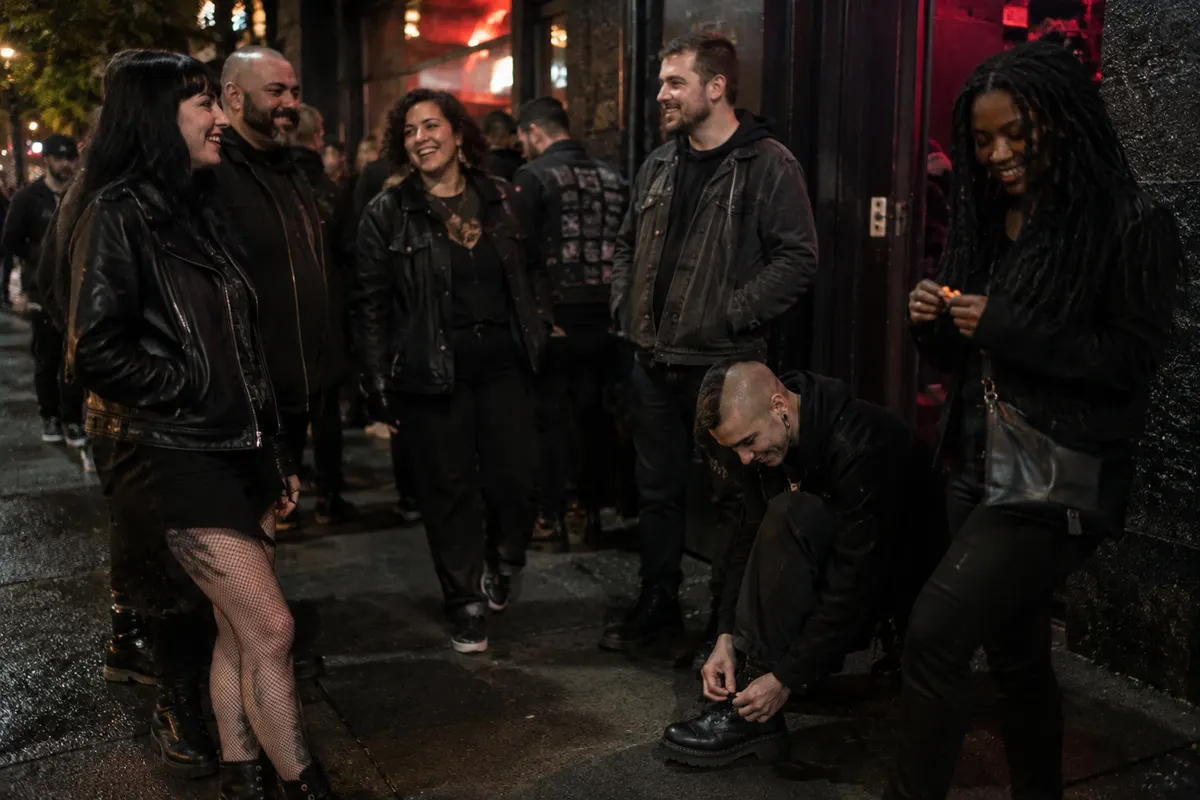
Boots, sneakers or sturdy closed-toe shoes are your friends. Loose slip-ons are brave in the way a paper umbrella is brave during a hurricane. Tie laces tight. Double-knot if you plan to enter the pit. If your shoe comes off, do not dive straight down into moving legs. Get help, point, and let the crowd open a pocket.
Take the sharp stuff off
Studs can be fine. Spikes that could scratch faces are not. Long chains can snag. Oversized rings can turn a friendly bump into a tiny medieval weapon. Save the more dangerous accessories for photos, not the front third of the floor.
For fashion that still hits hard without injuring the innocent, check the alt fashion guide and then edit your outfit like the pit is going to personally audit it.
Hydrate before you need it
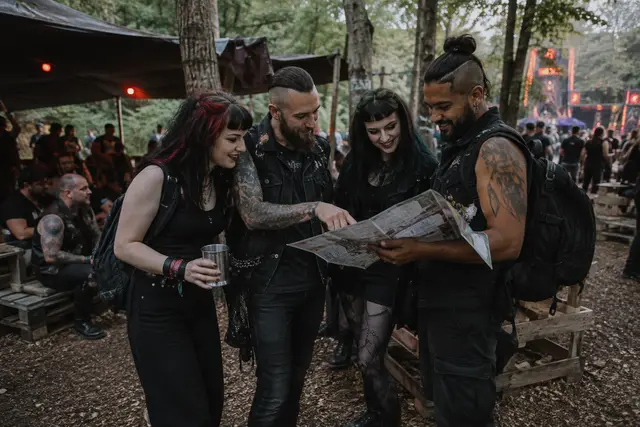
Festival and venue policies change constantly, but many events now publish clear rules about empty bottles, hydration packs, bag sizes and prohibited items. Some current festival info pages specifically allow empty non-glass water bottles or hydration packs, while others set clear bag limits, so checking the official policy before leaving home is part of modern show prep. (hellsinkimetalfestival.fi)
This is not glamorous. Neither is getting dizzy during the second opener and missing the set you came for.
Set a meetup point
Do this before the headliner starts. Pick somewhere specific: merch table left side, a certain pillar, the venue sign outside, the big weird mural near the restrooms. “Find me after” is not a plan. It is a curse with Wi-Fi dependence.
How to enter the pit without making it everyone’s problem
The edge is the doorway. Do not launch from five rows back like a haunted bowling ball. Move toward the edge, match the rhythm, then step in when there is space.
Good entry signs:
- People are smiling or laughing between hits.
- Fallen people get helped up instantly.
- The pit has visible flow, not random rage.
- There is room to exit.
- The crowd reacts to boundaries.
Bad entry signs:
- Someone is targeting smaller fans.
- People outside the pit are getting hit repeatedly.
- The floor is slick.
- Security is already dealing with injuries.
- Your body is saying “absolutely not, beloved.”
Listen to that last one. Your body is not betraying the scene. It is trying to keep your bones in the premium layout.
The wall of death: dramatic, fun, not mandatory
A wall of death usually means the crowd splits into two sides, waits for a cue, then runs toward the middle. Recent pit guides still define it that way, and safety discussions keep treating it as one of the riskier crowd formations because it involves speed, density and impact. (metalunderground.org)
If you do not want in, move sideways and back before the countdown. Do not stand in the lane hoping everyone will spiritually understand your boundaries. They will not. They are busy being a stampede with band shirts.
If you do join, keep your head up, arms ready to protect your chest, and do not lower your shoulder like you are trying out for a violent refrigerator league. The goal is impact with control, not becoming lore.
Pit manners for dating, friends and shy people
The pit is social, even when nobody is doing “networking.” It is one of the fastest ways to see someone’s character at a show.
A green flag at a metal or punk show:
- They check if you actually want to go in.
- They do not mock you for staying out.
- They help strangers without making a performance out of it.
- They know when to leave the floor.
- They do not use the pit to act possessive or tough.
A red flag:
- They drag you in after you said no.
- They call everyone “soft” for wanting basic safety.
- They target people at the edge.
- They disappear with your phone, jacket or ride plan.
- They treat injuries like proof of devotion.
If you are using Alt Chat, your profile Anthem can do some pre-show sorting for you. A doom metal profile song says something different from skate punk chaos, and both can start better conversations than “hey.” You can also use Realm to ask what the pit vibe is like before a local show, because sometimes the real venue wisdom lives with the person who knows exactly which floor tile gets slippery.
For more dating-specific chaos management, read metalhead dating or punk dating. Love is cool. So is not concussing your crush during the opener.
First-timer pit plan: one song at a time
If you are nervous, give yourself a tiny mission.
Song one: Watch from the side. Learn the exits.
Song two: Stand near the edge. Feel the movement without entering.
Song three: Step in for ten seconds, then step out.
Song four: If it felt good, go again. If it felt bad, enjoy the show from a calmer spot and declare victory anyway.
You do not have to “earn” your place by enduring something you hate. Metal and punk are full of different ways to belong: the rail person, the balcony goblin, the merch-table philosopher, the setlist hunter, the friend who guards jackets like a solemn dragon. The pit is one flavor, not the whole meal.
If your goal is to meet people, the pit can help, but it is not the only route. Compliment a patch. Ask about a band on someone’s vest. Offer a spare earplug. Say “that circle pit was ridiculous” after the set. For more easy openers, the how to make friends at concerts guide is basically social WD-40 for show gremlins.
A tiny etiquette script for awkward situations
You are allowed to speak up. Keep it short and clear.
- “I’m getting out.”
- “Let them up.”
- “Back up, they’re hurt.”
- “I’m not in the pit.”
- “You good?”
- “Need water?”
- “Security’s over there.”
No grand speech. No courtroom drama. Loud rooms reward simple words and visible gestures.
The real flex: leaving with everyone okay
A great pit is not measured by how many people got flattened. It is measured by the weird joy after: sweaty strangers laughing, someone finding a lost glasses case, friends comparing bruises like weather reports, and the quiet pride of knowing the room went hard without losing its heart.
So take the quiz result as a snapshot. Build your instincts. Watch the room. Help fast. Exit clean. And remember: the coolest person in the pit is usually not the one hitting hardest. It is the one who notices everything and still has enough breath to grin when the riff drops.
FAQ
How do I know if I am ready for a mosh pit?
You are probably ready if you can stay aware, keep your balance, respect the people around you and leave the pit when you need a break. Start at the edge, watch how that specific crowd moves, and jump in only when it feels right.
What should beginners do in a mosh pit?
Beginners should avoid the center at first, keep elbows down, protect their balance and help anyone who falls. Wear sturdy closed-toe shoes, skip sharp accessories, hydrate before the set and agree on a meetup spot with friends.
Is crowd killing the same as moshing?
No. Moshing usually means shared physical movement with some mutual care, while crowd killing means swinging into people who did not agree to it. Some hardcore scenes have different movement styles, so watch the room before joining.
What is the most important mosh pit rule?
Pick people up when they fall. The second rule is almost as important: if someone wants out, make space and let them out without making it weird.