Emo vs Goth: What's the Difference?
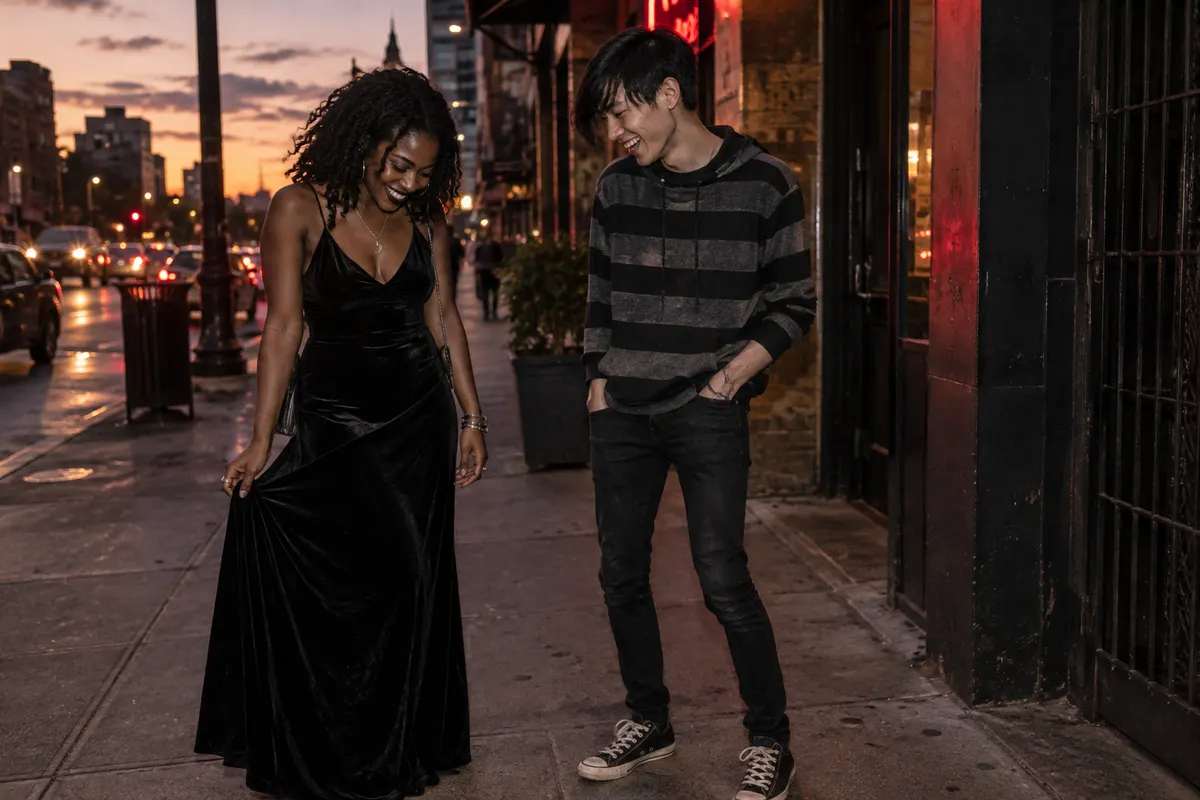
Someone at a party sees your black eyeliner and asks if you're "emo or goth." It's the oldest question in the alt world, and the honest answer is that emo vs goth is less a rivalry and more two cousins who turned up to the same family reunion in black. They overlap a lot, but they come from different places, sound different and dress differently.
Here's the fun, no-gatekeeping version of how to tell them apart.
Where goth came from
Goth was born in the UK at the tail end of the 1970s, out of the post-punk scene. Punk had kicked the door open, and a wave of bands started making music that was darker, moodier and more atmospheric.
A few milestones people usually point to:
- Bauhaus released "Bela Lugosi's Dead" in 1979, often called the first goth rock single.
- Siouxsie and the Banshees, The Cure and Joy Division were all building that cold, echoing sound around the same time.
- The Batcave, a London club night that opened in 1982, gave the scene a home and a look: big hair, fishnets, crucifixes and white faces.
From there goth spread out into deathrock in Los Angeles, darkwave in Germany, gothic metal in the '90s and a dozen other branches. If you want the full family tree, our guide to goth music genres breaks it all down.
Where emo came from
Emo started a few years later and an ocean away. In the mid-1980s, Washington, D.C.'s hardcore punk scene had a burst of bands who kept the loud guitars but sang about personal stuff instead of just politics and anger. That summer of 1985 is often called Revolution Summer, and bands like Rites of Spring and Embrace got tagged "emotional hardcore," shortened to "emocore," then just "emo."
Emo then came in waves:
- The '90s Midwest wave: twinkly guitars and heartfelt vocals from bands like Sunny Day Real Estate, Cap'n Jazz, The Promise Ring, Mineral and American Football.
- The 2000s wave: emo went huge with Jimmy Eat World, Dashboard Confessional, Taking Back Sunday, Fall Out Boy, Paramore and My Chemical Romance (who always said they weren't emo, which is the most emo thing ever).
- The revival: emo nights, reunion tours and a new generation of bands brought it all back. Our piece on the emo revival covers that comeback.
For a deeper look at the emo side, read What Is Emo?.
How the music sounds different
This is the easiest way to tell them apart. Put on a record and listen.
Goth music
- Lots of atmosphere: reverb, echo, chorus-soaked guitars.
- Basslines up front, often carrying the melody.
- Drum machines are common (The Sisters of Mercy famously used one).
- Vocals are often deep, dramatic or haunting.
- The mood is mysterious, romantic, spooky or cold. Think candlelight and fog.
Starter songs: "Spellbound" by Siouxsie and the Banshees, "A Forest" by The Cure, "Lucretia My Reflection" by The Sisters of Mercy.
Emo music
- Built on punk and indie rock guitars, sometimes twinkly, sometimes crunchy.
- Big sing-along choruses, especially in the 2000s era.
- Vocals that are earnest and personal, with the occasional scream.
- The mood is heart-on-sleeve: crushes, breakups, growing up, friends.
Starter songs: "The Middle" by Jimmy Eat World, "Cute Without the 'E' (Cut from the Team)" by Taking Back Sunday, "Misery Business" by Paramore.
The quick rule: goth sounds like a haunted castle, emo sounds like a diary read out loud in a basement show.
How the fashion is different
Both scenes love black, which is where the confusion starts. But the details are very different.
Goth style
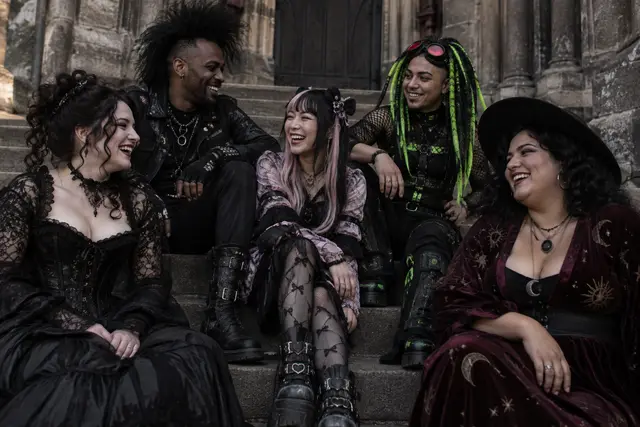
- Velvet, lace, mesh, PVC and corsets.
- Long coats, big skirts, tailored jackets.
- Platform boots, creepers and buckles.
- Silver jewelry: crosses, moons, bats, rings on every finger.
- Bold makeup: dramatic eyeliner, dark lips, sometimes pale foundation.
- Hair can be anything from a teased-up deathrock mess to long and sleek.
Goth fashion has a lot of sub-styles, from romantic goth to cybergoth to trad goth. Our guide to types of goth shows them all.
Emo style
- Band tees and fitted hoodies.
- Skinny jeans, studded belts, checkered patterns.
- Converse or Vans.
- Wristbands, chunky glasses, maybe a hoodie with thumb holes.
- Smudgy eyeliner that looks like you slept in it (on purpose).
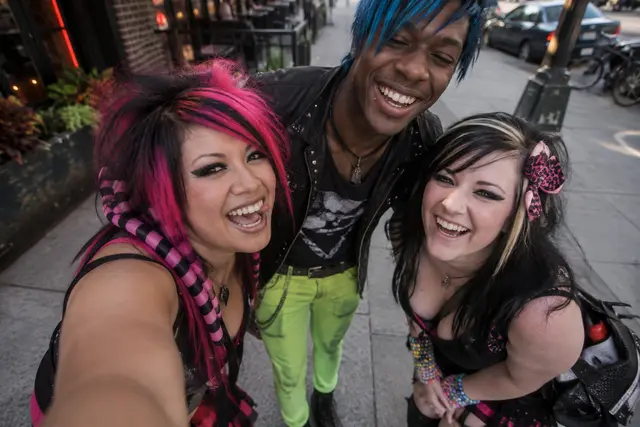
- The iconic side-swept fringe, often black, sometimes with bright streaks.
Layer it with a zip hoodie and you're basically ready for 2005.
The quick rule: goth dresses like a Victorian poet at a nightclub, emo dresses like they're about to go to a show and then get pancakes after.
The vibe and the culture
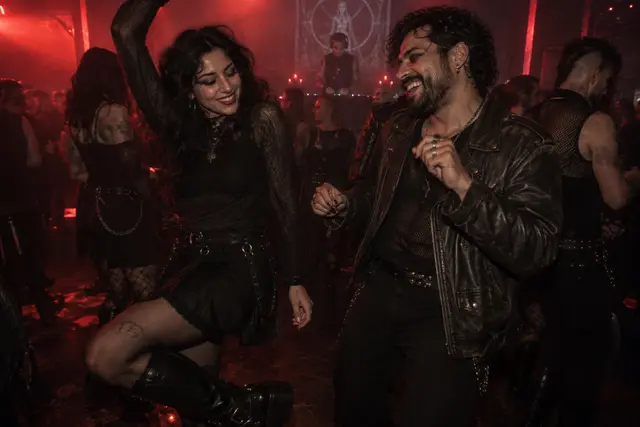
Goth culture tends to love the gothic in the old sense: horror films, old architecture, cemeteries in the daytime, Victorian aesthetics, vampire stories and dark romance. Goth club nights with a DJ and a smoke machine are the classic hangout, and big gatherings like Wave-Gotik-Treffen in Leipzig are a bucket-list trip.
Emo culture grew around live shows: basement gigs, all-ages venues, Warped Tour, and now emo nights where a whole room screams along to 2000s hits. It's very music-first and very social, with a lot of inside jokes about being dramatic.
Both scenes are full of funny, warm people who don't take themselves half as seriously as outsiders think.
Where they overlap
Here's the secret: a lot of people are a bit of both.
- AFI went from hardcore punk to a darker, goth-tinged sound in the early 2000s.
- My Chemical Romance borrowed theatrical, spooky imagery that goths recognize instantly.
- The Cure gets love from both sides, and plenty of emo bands name them as an influence.
- Scene and emo often get mixed up too, and our look back at scene kids explains that branch.
You don't have to pick a team. Wear a velvet skirt with a band hoodie. Put Bauhaus and Taking Back Sunday on the same playlist. That's not breaking rules, that's just having good taste.
A cheat sheet
| Goth | Emo | |
|---|---|---|
| Born | Late 1970s, UK | Mid-1980s, Washington, D.C. |
| Roots | Post-punk | Hardcore punk |
| Sound | Atmospheric, bass-heavy, dramatic | Guitar-driven, confessional, sing-along |
| Classic bands | Bauhaus, Siouxsie, The Cure, Sisters of Mercy | Rites of Spring, Sunny Day Real Estate, Jimmy Eat World, Taking Back Sunday |
| Look | Velvet, lace, boots, silver, bold makeup | Band tees, skinny jeans, studded belts, side fringe |
| Classic hangout | Goth club night | A live show or emo night |
Meeting people from both scenes
The best part about the emo vs goth question is that it makes a great conversation starter. Ask someone which side they're on and you'll get a 20-minute answer about their favorite bands, and probably a playlist.
If you want to meet people who'll happily argue about whether The Cure counts as goth, Alt Chat is a free app full of goth, emo, punk and metal people. You can set a profile song so people know exactly where you stand, or just hop into a chat room and ask the room.
FAQ
Is emo a type of goth?
No. Emo grew out of the 1980s hardcore punk scene in Washington, D.C., while goth grew out of British post-punk a few years earlier. They share black clothes and big feelings, but they are separate scenes with different music.
Can you be emo and goth at the same time?
Absolutely. Plenty of people love both The Cure and My Chemical Romance and dress somewhere in between. Nobody hands out membership cards, so wear and listen to what you like.
What came first, emo or goth?
Goth came first. Bands like Bauhaus and Siouxsie and the Banshees were shaping the goth sound by around 1979 to 1981, while the first emo bands appeared in D.C. in the mid-1980s.
How can you tell emo and goth fashion apart?
Goth fashion leans dramatic and old-world: velvet, lace, corsets, big boots and bold makeup. Emo fashion is more casual and band-tee based: skinny jeans, hoodies, studded belts, sneakers and a long side fringe.