Emo Era Quiz: Which Sad Kid Timeline Are You?
Emo is doing that very emo thing where it refuses to stay buried. One minute you are making a playlist for a late drive, the next you are realizing your favorite era might be a haunted mall, a neon Myspace profile, a basement show, or a TikTok clip with a noodly guitar intro.
This emo era quiz is here to sort your sad kid timeline. Not in a gatekeepy way. More like: if your personality were a flyer taped to a venue bathroom mirror, what year would be printed on it?
Why everyone is arguing about emo eras again
Emo never really left. It just changed jackets, got a different haircut, learned new posting habits, and came back with stronger opinions about guitar tone.
A very 2026 reason this conversation feels loud: My Chemical Romance’s The Black Parade hit No. 1 on the Billboard 200 with its 20th anniversary deluxe edition, two decades after the original 2006 album became one of the defining records of mainstream emo culture. AP called it the band’s first No. 1 album in the U.S., and Billboard reported the jump on the chart dated November 7, 2026. That is not just nostalgia. That is a whole generation, plus a new one, deciding the eyeliner was never a phase. (apnews.com)
At the same time, the 2010s emo revival is being re-examined as history, not just “that thing your cool friend kept trying to explain at the diner.” Andrew Sacher’s book Emo Revival: Community, DIY, and Rebirth in Post-Hardcore and Emo (2008–2018) was released in September 2026 and focuses on the fourth-wave scene as a community-driven movement, not just a playlist category. (andrewsacher.com)
Then there is the newer internet layer: Midwest emo memes, TikTok discovery, old songs becoming fresh to younger listeners, and newer bands pulling from old sounds without acting like they are trapped in a museum. Exclaim! framed 2026 as a moment where the emo revival is having its own revival, while Vice recently spotlighted current bands reviving Midwest emo for listeners who grew up with the last wave and listeners finding it now. (exclaim.ca)
So, yes, the timing is perfect. Let’s find your era.
Which Emo Era Are You?
Pick the answers that feel most like your inner soundtrack. No gatekeeping, just eyeliner archaeology and feelings with guitar tone.
1Your ideal Friday night starts with…
2Pick your emotional accessory.
3Someone asks what emo means. You say…
4Your flirting style is closest to…
5Pick a venue mood.
6Your profile song would most likely say…
7Choose a hangout snack after the show.
8Your biggest emo strength is…
9Pick your signature text after meeting someone cool.
What your emo era result actually means
Your result is not a purity test. It is a vibe map. Emo has always been a little too dramatic, a little too sincere, and a little too personal to fit neatly into one folder named “sad guitar stuff.”
Think of the quiz results like five rooms at the same weird house party:
| Result vibe | Core energy | Likely habitat | Dating profile giveaway |
|---|---|---|---|
| Mall-Rat Melodrama | Big choruses, big feelings | Food court, theater lobby, parking lot after a show | “Ask me about my top 5 albums.” |
| Neon Scene Spark | Chaotic color, internet friendship, camera angles | Bedroom mirror, club night, group chat | “I still know how to tease my hair.” |
| Basement Revival Romantic | DIY, community, jangly guitars | House show, zine table, borrowed couch | “I made you a playlist, but it has footnotes.” |
| Algorithm Angst Gremlin | Meme-aware, playlist-fluent, emotionally online | TikTok scroll, Discord, late-night headphones | “This song found me at a dangerous hour.” |
| Adult Emo Night Legend | Nostalgia with knees that click | Emo night, reunion show, brunch after the pit | “I hydrate now. Growth.” |
No result is more “real” than the others. Emo has always been argued over by people wearing black hoodies in different decades. That is tradition.
The five emo timelines, explained without a lecture from a guy at the merch table
1. Mall-rat melodrama
This is the era many people picture first: black skinny jeans, side bangs, studded belts, and the feeling that every hallway was a music video waiting to happen. The mall-rat era is dramatic, theatrical and weirdly social. You might have met people at shows, in school, through forums, or by complimenting somebody’s band tee near the pretzel place.
This vibe is not subtle. It likes albums with arcs, outfits with intent, and crushes that feel like weather events. If this is your result, you probably believe a good song should sound like standing under fluorescent lights while making a life-changing decision about texting back.
Want the roots without the myths? Start with What Is Emo? Music, Style and Culture Explained, because the word has meant a lot of different things across different scenes.
2. Neon scene spark
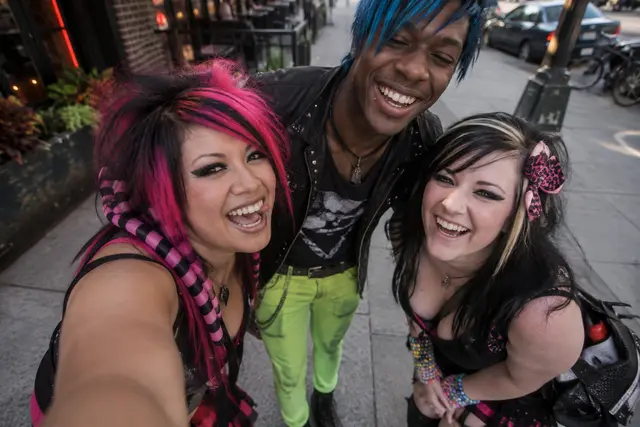
Scene was emo’s sugar-rush cousin who learned HTML, took 400 mirror pics, and named every photo album something unhinged. It pulled from emo, pop punk, metalcore, electronic music, rave fashion and social media chaos. It was messy, bright, playful and sometimes ridiculous in the best way.
If this result got you, you might love maximalism: raccoon hair, plastic jewelry, fingerless gloves, pixel hearts, big eyeliner, tiny shorts over leggings, and screen names that sounded like a cybercrime.
Scene nostalgia is huge because it was not just a look. It was a whole online language. Your profile song mattered. Your top friends mattered. Your angles mattered. Your ability to type with three extra letters and still be understood? Legendary.
For a deeper time capsule, read Scene Kids: A Fun Look Back at the 2000s Scene Era.
3. Basement revival romantic
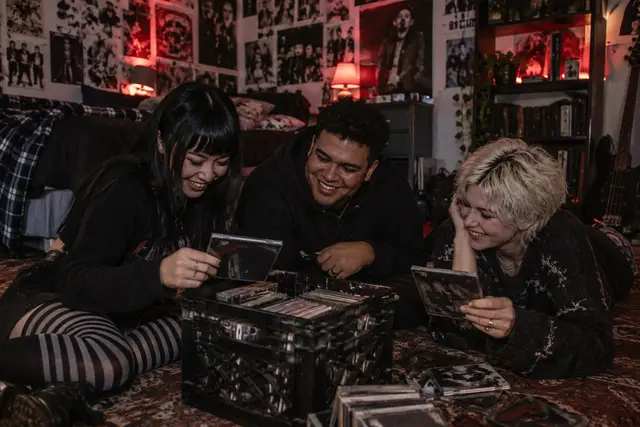
This one is for the people who like their feelings with awkward stage banter, tangled guitar parts and a show space that may or may not have working heat. The 2010s emo revival turned the focus back toward DIY scenes, small venues, independent labels, house shows and community energy.
The basement revival romantic is sincere but allergic to slickness. You might love songs that sound like they were recorded close enough to hear the floor creak. You might also be the friend who says “we should start a band” after one sparkling water and a hard conversation in the parking lot.
This era matters because it helped re-open emo for people who did not see themselves in the glossy version. It made room for scrappier bands, mixed bills, zines, smaller cities and fans who wanted less rock-star distance and more “help stack chairs after the show” energy.
If that hits, the bigger story is in The Emo Revival: Why Emo Is Back.
4. Algorithm angst gremlin
The algorithm angst gremlin is not less real because they found a song through a clip, meme or playlist. Honestly, that is just the modern version of hearing something through a wall and asking, “Wait, what is this?”
This era is fast, layered and funny in a slightly cursed way. A track can be a joke, a comfort object, a fashion cue and a genuine emotional gut punch at the same time. A Midwest emo intro can become a meme and still send somebody down a rabbit hole of full albums, local shows and deep-cut recommendations.
If this is you, your taste probably jumps across decades. You might put a 2006 anthem, a 2014 basement classic, a current fifth-wave-ish track and a hyperpop-adjacent sad song on the same playlist without asking permission from the council of cardigan wearers.
Good. That is how scenes stay alive.
5. Adult emo night legend
This result is for the people who remember enough to have stories, but not enough to remember where they put their earplugs.
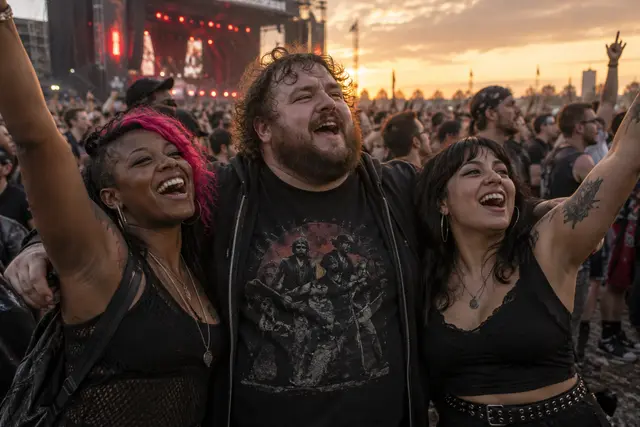
Adult emo culture is having a beautiful little glow-up. Emo nights, reunion tours, anniversary albums and themed parties let people reconnect with music that shaped them, but with better boundaries and comfier shoes. You can scream along, take a break near the wall, go home at a reasonable hour, and still be deeply emotionally correct.
The adult emo night legend knows nostalgia can be fun without becoming a cage. You can love the old songs and still discover new bands. You can joke about your past hair choices and still respect the kid you were. You can flirt, make friends, or just stand there with your arms crossed having the time of your life.
If you want to find one near you, try Emo Nights and Emo Club Nights: How to Find One Near You, and always check the event’s socials before you go.
How to use your result in real life
Make a playlist that tells the truth
Do not make the playlist you think proves you are cool. Make the one that makes sense for your actual life.
Try this structure:
- One origin song — the track that first pulled you in.
- One dramatic classic — something huge, theatrical or painfully catchy.
- One deep cut — the song you would play for somebody you trust.
- One current band — proof you are not frozen in 2008.
- One wild card — the song that does not “fit” but absolutely belongs.
If you use Alt Chat, your profile Anthem can do some of this heavy lifting. A song on your profile says, “Here is my emotional weather report,” without making you write a 900-word bio while overthinking punctuation.
Dress like your era, not a costume rack
A good emo-era outfit should feel lived in. You do not need to recreate a decade perfectly. Take the part that still feels like you.
- Mall-rat melodrama: black denim, striped sleeves, worn sneakers, one dramatic accessory.
- Neon scene spark: bright hair clips, loud color, playful prints, chunky jewelry.
- Basement revival romantic: flannel, thrifted layers, tote bag, beat-up shoes.
- Algorithm angst gremlin: mixed aesthetics, headphones, oversized hoodie, one oddly specific reference.
- Adult emo night legend: black tee, jacket with history, comfortable boots, earplugs like a responsible icon.
The trick is not to ask, “Do I look emo enough?” Ask, “Can I move, dance, talk, sweat, sit on a curb and still feel like myself?”
Let your era guide your flirting style
Emo flirting is often just two people exchanging music recommendations until someone becomes brave.
- Mall-rat melodrama flirts with big gestures and intense eye contact.
- Neon scene spark flirts with compliments, selfies and chaotic banter.
- Basement revival romantic flirts by saying, “This song reminded me of you,” then pretending that is normal.
- Algorithm angst gremlin flirts through memes at 1:13 a.m.
- Adult emo night legend flirts by asking if you need water, which is honestly elite.
If you are dating in the scene, music taste can be a spark, but it should not be the whole relationship. Shared values, kindness, humor and how someone treats people at shows matter way more than perfect playlist overlap.
The real answer: you can be more than one era
You might be a mall-rat melodrama soul with basement revival habits. You might be a neon scene spark who now dresses like a soft grunge librarian. You might be an adult emo night legend who finds new bands through the same app that keeps showing you frogs in tiny hats.
That is fine. Emo has never been one clean timeline. It is a hand-me-down hoodie with new patches sewn on every few years.
The best version of this scene is not stuck arguing over who arrived correctly. It is people sharing songs, making room at shows, checking on each other, starting weird little group chats, and letting the music keep changing without losing its heart.
FAQ
What is an emo era quiz?
An emo era quiz matches your taste, style and social vibe to a specific emo timeline, like 2000s mall emo, neon scene, Midwest revival or current TikTok-era emo. It is mostly for fun, but it can also help you understand what part of emo culture you connect with most.
What are the main emo eras?
People usually talk about early emotional hardcore, 1990s Midwest emo, 2000s mainstream emo and emo-pop, late-2000s scene culture, the 2010s emo revival and newer internet-driven waves. The borders are messy, which is part of the charm.
Is scene the same as emo?
Scene and emo overlap, but they are not the same thing. Emo is rooted in music and emotional punk-adjacent scenes, while scene culture leaned hard into neon fashion, social media, teased hair, electronic sounds and chaotic 2000s internet energy.
Can I be emo if I discovered the music on TikTok?
Yes. Finding emo through TikTok, playlists or memes does not make your connection fake. The best next step is to listen deeper, learn the history, support current bands and treat the scene like a community instead of just an aesthetic.