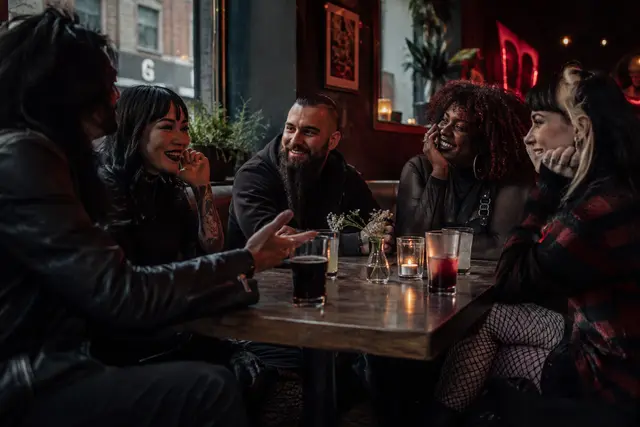
Kink Green Flags Checklist: Are They Safe to Explore With?

Kink green flags are the quiet stuff that makes exploring feel less like jumping into a haunted basement and more like entering a well-lit goth club with exits clearly marked. The hottest thing in the room is not confidence. It is someone who can hear no, ask better questions, and keep their ego out of your boundaries.
This guide is for adults who are curious about BDSM, power exchange, rougher aesthetics, soft dominance, restraint talk, role dynamics, or simply dating people who use the word kink without acting like a cursed goblin with Wi-Fi. Use the checklist, then read the notes after it so your score actually means something.
Why kink green flags matter right now
Kink has moved way past secret corners of the internet. People mention it in dating profiles, joke about it in group chats, and bring it into alt dating spaces where black eyeliner and big boots are already doing half the flirting. That visibility is cool, but it also means beginners run into a messy mix of thoughtful people, fantasy-brained people, and people who learned consent from a meme that should have stayed buried.
The fresh angle people are searching for now is not only what is kinky. It is how to tell if a person is safe enough to explore with. Recent kink negotiation resources keep circling the same practical themes: talk before play, name limits, agree on safewords or signals, plan aftercare, and check in after. (sanctum.vestacreate.com)
That lines up with broader consent education too. Planned Parenthood teaches the FRIES model: consent should be freely given, reversible, informed, enthusiastic, and specific. (plannedparenthood.org) In kink, those words are not cute poster language. They are the whole floor under the dance.
Kink Green Flags Checklist: Are They Safe to Explore With?
Tick every sign that honestly fits the person you are talking to or dating. If you are checking this for yourself, even better: be the green flag in big boots.
How to read your checklist result
The checklist is not a magic detector. It will not spot every bad vibe in a velvet cloak. Think of it as a lantern. It helps you see patterns before you walk deeper into the woods.
If you checked only a few items, that does not automatically mean the person is evil. They might be new, awkward, shy, or still learning. But if someone is new and humble, they can still say, I do not know enough yet, let us go slow. That is a green flag. If someone is new and acts like an underworld duke with a certification from TikTok University, that is not mysterious. That is homework with boots.
If you checked a lot of items, you are looking at better signs: patience, clarity, privacy, follow-through, and care after the exciting part. Still, take your time. A long checklist score is not consent for anything. Consent has to be specific and current, and it can change.
The biggest kink green flags, explained
1. They treat negotiation as hot, not annoying
A safer kink partner does not act wounded because you asked what they mean. They do not say, just trust me, as a shortcut around details. They can talk about roles, intensity, limits, timing, privacy, and what happens if either person wants to stop.
The National Coalition for Sexual Freedom says kink consent should be based on explicit prior agreement rather than guesses from body language, past behavior, or what someone did with another person. It also emphasizes informed consent, including risks and risk-reduction steps. (ncsfreedom.org)
That means a real green flag sounds less like a movie villain monologue and more like:
- What are you curious about?
- What is off the table?
- What is a maybe, but only under certain conditions?
- What words should I use if I check in?
- What should I avoid because it ruins the vibe or feels bad?
- What kind of aftercare helps you land?
Specific is sexy. Vague is where chaos hides under the bed.
2. They accept no without trying to renegotiate your spine
A no should not begin a courtroom drama. If someone responds to a limit with whining, sulking, guilt, mockery, or a TED Talk about how experienced they are, put the cape back on and drift away.
Green flag people do not need your limit to match their preferences. They can be disappointed without making it your problem. They know a boundary is not a personal insult. It is the map.
Try this tiny test early in conversation: name a low-stakes preference. Maybe you do not want pet names from strangers. Maybe you do not want kink talk before you have basic chemistry. Maybe you prefer to meet in public first. Watch what happens. Do they adjust easily, or do they make you manage their feelings?
3. They know safewords are useful, not magical
Safewords matter, especially when a scene might involve intense emotion, power exchange, or playful language that makes ordinary stop signals unclear. NCSF materials name red and safeword as widely recognized stop words, and they also stress having a way to stop at any time. (ncsfreedom.org)
But a safeword is not a substitute for paying attention. A safer person also checks breathing, body language, emotional tone, and whether the plan still feels good. They make space for nonverbal signals too, because not every person can speak clearly in every situation. Dropping an object, tapping out, snapping fingers, or using a hand signal can be part of the plan.
A green flag sentence: We will stop for red, slow down for yellow, and I will still check in if you seem off.
A red flag sentence: I do not stop unless you safeword.
Nope. Into the crypt with that.
4. They respect privacy and scene reputation
Alt scenes can feel huge online and tiny in real life. One messy screenshot can travel faster than a drummer leaving a group chat. Kink privacy is not only polite. It is safety.
A green flag person asks before sharing photos, stories, labels, dynamics, or private messages. They do not out anyone as kinky, poly, queer, submissive, dominant, switchy, curious, or anything else. NCSF consent guidance also warns against outing people to family, friends, coworkers, or people outside the alt-sex community. (ncsfreedom.org)
If someone treats discretion like a burden, be careful. If they brag with too many identifying details about past partners, assume you could become the next campfire story.
5. They plan aftercare before anyone needs it
Aftercare is the landing pad. It can be quiet time, water, a blanket, reassurance, a snack, a ride plan, a funny video, a next-day text, or space alone. It is not one-size-fits-all, and it is not only for submissive people. Tops, doms, switches, and anyone involved can need care after intensity.
Professional counseling education about kink notes that BDSM consent discussions often include what happens before, during, and after a scene, including safewords and aftercare plans. (manifold.counseling.org)
Green flag people ask: What helps you feel steady after? Do you want closeness, quiet, jokes, food, music, or a check-in tomorrow?
For a deeper beginner guide, read BDSM Aftercare for Beginners. It is basically the warm hoodie section of kink education.
Green flags in profiles and early chats
You can spot a lot before you ever meet. Not everything, but enough to save yourself from dating a human smoke alarm.
Better profile signs
Look for people who:
- Name interests without demanding them from strangers.
- Mention consent, kindness, or communication without making it sound like a badge.
- Have a life outside kink: music, art, pets, horror movies, gym, books, shows, cooking, whatever.
- Use clear photos and real profile details.
- Do not lead with commands to people they have never met.
On Alt Chat, alt people can use an Anthem, Realm posts, groups, and private messages to show more than a single spicy label. That matters because kink compatibility is not the whole relationship. You still need the regular stuff: humor, pacing, music taste, values, and the ability to answer a message like a person with a pulse.
If you want the broader dating version of this, Goth Dating Green Flags pairs nicely with this guide.
Better early chat signs
A safer person can flirt without cornering you. They ask what you like, but they also ask what pace feels comfortable. They do not turn every sentence into a test of obedience. They do not punish slow replies. They do not assume your outfit, tattoos, piercings, boots, collar-style jewelry, or music taste equals permission.
A strong early line is: I am into kink, but I do not want to make the whole chat about that unless you do.
That is elegant. That is black nail polish with emotional intelligence.
Red flags wearing fake green paint
Some people know the right words but use them like stage props. Watch behavior.
Be careful with anyone who:
- Says consent is important, then keeps pushing.
- Calls every ex crazy or unsafe.
- Claims limits prove you are not really kinky.
- Uses dominance as an excuse for disrespect outside agreed play.
- Wants secrecy that protects them but not you.
- Refuses public first meets with new people.
- Mocks safewords, aftercare, condoms, health talk, or STI testing conversations.
- Gets angry when asked basic questions.
- Says experienced people do not need negotiation.
That last one is especially dusty. Experienced people usually negotiate better, not less. A guitarist who has played for twenty years still tunes the guitar. Be serious.
What to do if your score was low
If your checklist result is low, slow down. You do not have to stage a dramatic exit through cathedral fog unless your gut says leave. You can ask clearer questions and see how they respond.
Try:
- I like talking to you, but I need slower pacing around kink.
- Before we discuss details, I want to talk limits and aftercare.
- I do not agree to new things mid-scene.
- I need privacy around anything we share.
- If no is difficult for you to hear, we are not a match.
If they respond with care, your score may change over time. If they respond with pressure, you got your answer.
If a conversation ever leaves you scared, trapped, or worried you might be harmed, reach out to someone you trust or a local crisis line; in the U.S., you can call or text 988 for urgent emotional support.
What to do if your score was high
A high score is a good sign, not a lifetime pass. Keep the same standards once chemistry kicks in. Crush energy can turn a smart person into a raccoon holding a sparkler.
Before exploring, agree on:
| Topic | Ask this |
|---|---|
| Desire | What are we each hoping to feel? |
| Limits | What is a hard no, and what is a maybe? |
| Signals | What means slow, stop, and check in? |
| Health | Anything physical or emotional we should plan around? |
| Privacy | What can be shared, and what stays private? |
| Aftercare | What helps each of us feel grounded after? |
| Debrief | When should we talk about what worked? |
If power exchange is part of the interest, keep it plain at first. You can read Soft Dom Meaning for a kind, non-cringey breakdown of gentle dominance without the fog machine.
And if you want to test your own readiness, not just the other person, try the BDSM Consent Quiz. Being safe to explore with is a two-way mirror.
The quiet truth: green flags are boring in the best way
The safest kink traits are not always cinematic. They are steady. They text when they say they will. They do not rush. They can laugh when a plan gets awkward. They can pause without making it weird. They know that trust is not proven by how far you go, but by how well everyone is cared for when someone says stop.
That is the kind of dark romance worth keeping: velvet on the outside, emotional seatbelts underneath.
FAQ
What are green flags in kink dating?
Green flags in kink dating include clear consent, respect for limits, patience, privacy, safer planning, and a willingness to talk before anything happens. A safer person does not rush you, shame your boundaries, or treat experience like a free pass.
How do I know if someone is safe to explore BDSM with?
You can never know with perfect certainty, but you can look for patterns: they listen well, accept no without debate, discuss safewords and aftercare, and stay calm when plans change. Start slow, meet in public first if they are new to you, and trust behavior over big dramatic claims.
Is a safeword enough for BDSM consent?
No. A safeword helps, but consent also needs clear negotiation, limits, risk awareness, check-ins, and the right to stop at any time. A nonverbal signal matters too, especially if speaking could become difficult.
What is a kink negotiation checklist?
A kink negotiation checklist is a pre-play conversation guide for desires, hard limits, soft limits, safewords, health needs, privacy, aftercare, and debriefing. It can make the conversation less awkward because nobody has to invent the whole thing from scratch.