
Goth Laundry Day: How to Keep Black Clothes Black Without Losing Your Mind
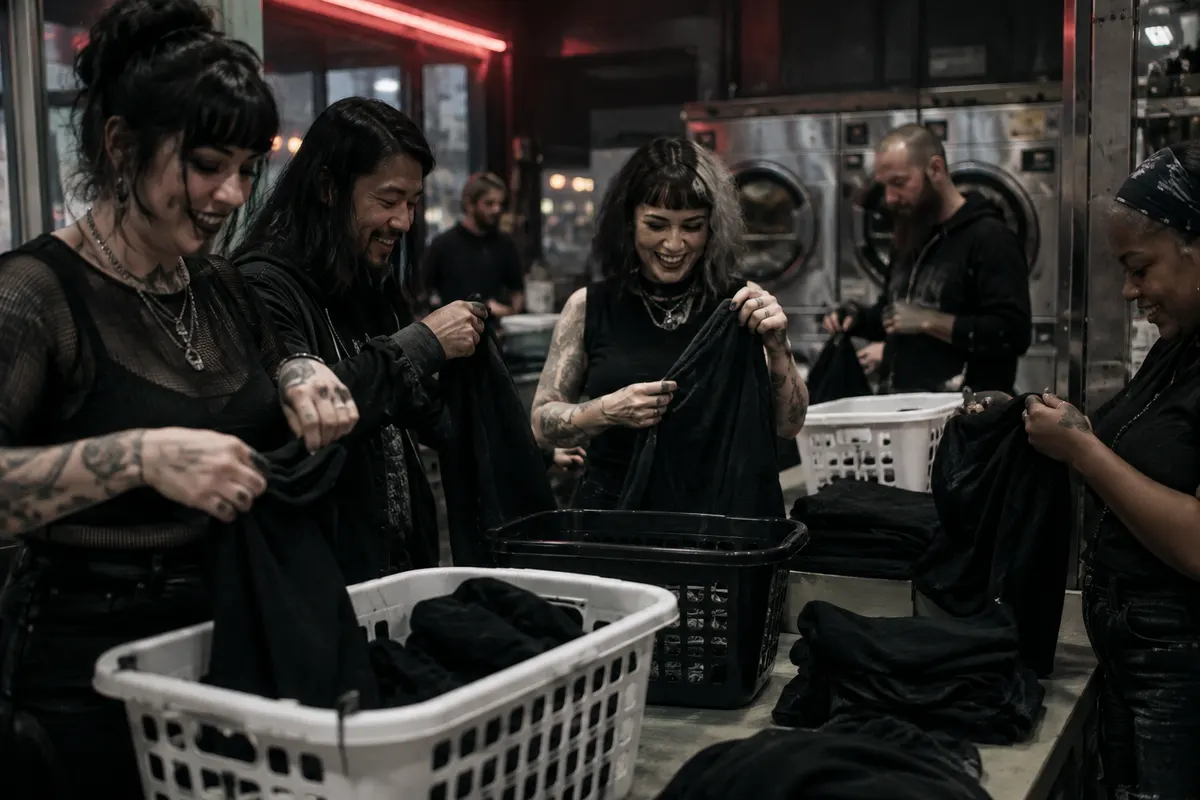
Your all-black wardrobe is mysterious, romantic and powerful until laundry day turns it into a crime scene of gray lint, faded denim and one sock that looks like it survived a basement flood. Goth laundry is not just washing clothes. It is textile necromancy with quarters.
This guide is for every goth, emo, punk, metalhead, grunge creature, mall-rat elder, baby bat and black-wardrobe loyalist who has ever pulled a shirt from the dryer and whispered, “You used to be darker.” Black clothes are still a fashion constant — Lyst reported that black stayed the number-one color for purchase intent every year from 2016 through 2026 — but keeping them crisp takes a little strategy and a lot of emotional support. (lyst.com)
Why Goth Laundry Feels Like a Boss Fight
Laundry is already annoying. Goth laundry adds side quests:
- Every speck of lint is visible from orbit.
- One white towel can ruin the vibe of an entire load.
- Black jeans slowly become charcoal jeans, then “sad sidewalk” jeans.
- Velvet attracts pet hair like it owes money.
- Fishnets enter the washer as clothing and leave as abstract sculpture.
- One forgotten tissue becomes indoor snow.
- Your favorite hoodie somehow fades faster than your least favorite work shirt.
The fresh problem is that everyone is talking about personal style like it is a full-time job. Search-driven trend reports keep showing people bouncing between nostalgia, resale, expressive layering and color experimentation, while black remains a forever base layer for many closets. Google’s 2026 fashion search report called out “fresh yet familiar” fashion interest, and Depop’s 2026 trend report highlighted era mixing, archival pieces and expressive layering as part of how people are styling themselves now. (blog.google)
Translation: people are buying, thrifting, remixing and wearing more statement pieces. For alt people, that often means delicate mesh, band tees, black denim, faux leather, lace, velvet, patches, chains and one emotionally significant cardigan that must never meet a harsh spin cycle.
If you’ve ever read Goth Girl Aesthetic vs. Actually Being Goth Outside, you already know the outfit online and the outfit in the real world are cousins, not twins. Real life includes sweat, bus seats, rain, pizza grease, club fog, eyeliner dust, grass from sitting outside the venue, and the tiny gray fuzz that appears on black clothes like a curse.
The Goth Laundry Alignment Chart
Before we get practical, identify your laundry personality. No quiz widget needed. Just self-recognition and possibly shame.
| Type | Signature move | Laundry danger |
|---|---|---|
| The Midnight Sorter | Separates blacks, dark grays, reds, delicates and “emotional support hoodies” | Takes 2 hours to start one load |
| The Chaos Bat | Throws everything in and hopes the machine respects the aesthetic | Owns many gray-black shirts now |
| The Velvet Historian | Reads care labels like ancient prophecy | Has 14 drying racks and no regrets |
| The Tour Shirt Guardian | Will protect one band tee more fiercely than personal documents | Panics near hot water |
| The Laundromat Vampire | Does laundry after dark, in boots, with headphones | Leaves one sock behind every time |
| The Lint Goblin | Carries a lint roller but never knows where it is | Looks lightly haunted by fuzz |
No judgment. We have all been the Chaos Bat at least once. Usually at midnight. Usually with a towel.
The Golden Rule: Read the Care Label, Then Be Dramatic Anyway
The tiny tag inside your garment is not decoration. It is the garment’s diary. It tells you if your shirt can handle machine washing, if your dress wants to be laid flat like a Victorian ghost, or if your jacket is basically saying, “Do not put me in water, beloved fool.”
The American Cleaning Institute recommends checking care labels before washing and notes that dark clothes fade after repeated washing, even with good care. It suggests turning garments inside out, using shorter cycles when appropriate and choosing products meant to help reduce fading. (cleaninginstitute.org)
That last part matters because goth laundry has two enemies:
- Abrasion — clothes rubbing against other clothes, the washer drum and hardware.
- Heat and rough handling — the “make it clean faster” impulse that can age fabric.
Your black clothes are not always delicate little bats, but many of them do better when treated like special guests instead of gym towels.
Quick label translation for dramatic people
- Machine wash cold: “I can party, but keep it chill.”
- Gentle cycle: “I bruise emotionally and texturally.”
- Lay flat to dry: “Hang me and I may become longer than your regrets.”
- Dry clean only: “I have rich-person needs, even if you thrifted me.”
- Do not bleach: “Do you want beige? Because this is how you get beige.”
- Wash separately: “I bleed. Fashionably.”
Sorting: The Ritual Circle of Clean Darkness
Sorting is not about being fussy. Sorting is how you stop your wardrobe from forming a lint-based alliance against you.
Load 1: The sacred blacks
This is your main goth laundry load:
- Black tees
- Black jeans
- Black socks
- Black cotton dresses
- Black hoodies
- Black skirts
- Dark gray pieces you trust
- Band shirts that have already proven they do not bleed dye
Wash these together, inside out, with zippers zipped and buttons buttoned. Turning black clothing inside out helps protect the outside surface from abrasion, and Consumer Reports specifically notes that agitation and tumbling can break down fibers and make garments look faded. (consumerreports.org)
Load 2: The lint criminals
Do not wash these with your black clothes unless you enjoy suffering:
- Towels
- Fuzzy blankets
- White socks
- Shedding sweaters
- Fluffy robes
- Certain fleece items
- Anything that looks innocent but has betrayed you before
The American Cleaning Institute’s laundering problem guide points to improper sorting as a cause of lint transfer and recommends sorting to keep lint-shedding fabrics away from fabrics that attract lint. (cleaninginstitute.org)
This is why your black hoodie comes out looking like it cuddled a sheep. It was not a mystery. It was the towel.
Load 3: The delicate crypt
Use mesh bags and gentle settings for:
- Lace
- Mesh tops
- Fishnets
- Corset-style tops, if washable
- Garments with straps, chains or hardware
- Anything with dangling bits that could become washer spaghetti
Mesh bags are not glamorous, but neither is untangling fishnets from a zipper while standing in a laundromat under fluorescent lights like a tragic raccoon.
Load 4: The suspicious new piece
New black clothes can bleed dye. New red, burgundy, purple, hot pink and neon pieces can also cause chaos. The American Cleaning Institute notes that unstable dyes can cause color loss or fading, especially in bright colors and black. (cleaninginstitute.org)
Wash new dark or intense-color items separately the first time, or hand wash them if the label says so. If the water turns spooky, congratulations: your shirt has secrets.
Washing Black Clothes Without Summoning the Fade Demon
Now we get tactical.
Turn everything inside out
Inside out is the goth laundry handshake. It protects prints, reduces surface wear and keeps your shirt’s public-facing side from getting roughed up. This is extra important for:
- Screen-printed band tees
- Black jeans
- Graphic hoodies
- Garments with decorative distressing
- Anything you want to keep looking “freshly emerged from a crypt boutique” instead of “washed with gravel”
Both Consumer Reports and Whirlpool recommend turning dark garments inside out before washing to reduce fading and protect the garment surface. (consumerreports.org)
Use a shorter cycle when you can
More washing time means more rubbing. More rubbing means more wear. The American Cleaning Institute suggests using a shorter wash cycle for dark clothes when machine washing is appropriate, and Consumer Reports also notes that less time in the washer can mean less fading. (cleaninginstitute.org)
Your clothes do not need a three-act opera every time. If they are lightly worn, a shorter cycle may be enough.
Do not overload the washer
Overloading feels efficient until your clothes come out with detergent streaks, lint islands and one damp sleeve. Clothes need room to move. Not mosh-pit room. Gentle swaying room.
If the washer is packed tighter than the front row of a reunion show, split the load.
Use the right amount of detergent
This is where many black wardrobes fall. More detergent does not mean cleaner clothes. It can mean residue, streaks and sadness.
Consumer Reports says detergent streaks on dark clothes are often caused by too much detergent or water that is too cold for the detergent to dissolve properly. The American Cleaning Institute also lists undissolved detergent as a cause of powdery residue that shows up strongly on dark or bright colors. (consumerreports.org)
If your black shirt comes out with ghostly white marks, do not immediately assume the garment is ruined. It may just need a rinse or rewash without extra detergent.
Cold water is usually your friend, but not a personality trait
Cold water is commonly recommended for dark clothing, and Consumer Reports notes that many modern detergents are designed for cold water and that cool water can help clothes last longer. (consumerreports.org)
But here is the nuance: always follow the care label. If an item is very sweaty, has body oil buildup, or smells like it spent three days in a venue backpack, you may need a different approach. Spot treat. Pre-soak if appropriate. Use the detergent directions. Do not just whisper “cold water” at a haunted hoodie and expect miracles.
Drying: Where Good Black Clothes Go to Become Gray
Dryers are convenient. Dryers are also tiny fabric tornadoes.
High heat can be rough on clothes, and tumbling adds more friction. If you want your black clothes to stay black longer, air-drying your favorite pieces is the move.
Air-dry the beloved items
Air-dry these when possible:
- Band tees you would save in a minor apartment emergency
- Black jeans you finally broke in
- Mesh or lace layers
- Hoodies with prints
- Anything with elastic
- Anything with faux leather or vinyl details, if the label allows washing at all
Lay heavy knits flat so they do not stretch into sorrow noodles. Hang tees on a drying rack. Keep direct sun in mind because sunlight can fade fabrics over time. Your black clothes want a shadowy little spa day, not a desert pilgrimage.
If you use the dryer, use low heat
Sometimes life is life. You need the shirt dry. Fine. Use low heat when the label allows, and remove clothes while they are slightly damp to finish air-drying.
Also: clean the lint trap. That little gray blanket is not a collectible.
Dryer sheets and pet hair
The American Cleaning Institute suggests using a dryer sheet to help remove pet hair and repel lint. (cleaninginstitute.org) If your care label allows tumble drying and dryer sheets work for your skin and household, this can help. If not, try wool dryer balls, a lint brush, or a slightly damp rubber glove after drying.
The final boss is still your pet sitting directly on the clean black laundry while making eye contact.
The Lint Survival Manual
Lint is not dirt. Lint is humiliation.
It appears right before you leave. It gathers on your pants during important moments. It turns a sleek outfit into “I own a couch.”
The anti-lint kit
Keep one of these near your door, desk or bag:
- Lint roller
- Reusable fabric brush
- Small travel roller
- Packing tape in emergencies
- Damp washcloth for quick fixes
- Rubber glove for pet hair
Lint prevention beats lint panic
Do this before washing:
- Empty pockets. Tissue is the enemy.
- Close zippers so they do not rough up softer fabrics.
- Wash towels separately.
- Shake out pet blankets far away from the sacred blacks.
- Clean the washer seal if it traps fuzz.
- Do not mix black cotton with fluffy new sweaters unless you enjoy regret.
Emergency lint removal, ranked
| Method | Rating | Notes |
|---|---|---|
| Lint roller | 10/10 | Classic for a reason |
| Fabric brush | 9/10 | Great for coats and sturdier fabrics |
| Tape | 7/10 | Works, but you will look like you are building a tiny trap |
| Damp hand | 5/10 | Desperation goblin method |
| Pretending it is intentional texture | 3/10 | Respect the confidence |
| Standing farther away from people | 2/10 | Not a real solution, but relatable |
If your outfit gets linty right before a date, take a breath. Most people are not inspecting you like a museum textile curator. And if they are, you can talk about music until they stop. How to Pick the Perfect Profile Song may help you redirect the energy.
Band Tees: Tiny Museums You Can Sweat In
Band tees deserve their own section because they are not just shirts. They are receipts from nights you survived, bands you love and merch-table decisions made with the confidence of a person who definitely did not need groceries.
How to wash band tees
- Turn inside out.
- Wash with dark clothes.
- Use cold water if the care label allows.
- Choose a gentle or shorter cycle.
- Avoid high heat.
- Air-dry if the print matters to you.
Screen prints crack over time. Some cracking looks cool. Some cracking makes the vocalist’s face look like a cursed map. Slower wear is the goal.
The “shirt too sacred to wear” problem
Many alt people own at least one shirt in this category:
- Rare tour shirt
- First show shirt
- Discontinued design
- Perfectly softened vintage tee
- Shirt connected to a very specific life era
You can preserve it by washing gently, air-drying and storing it away from direct light. You can also wear it, because clothing wants to live. Both choices are valid. The only wrong choice is washing it with towels and then acting surprised.
Black Jeans: The Slow Fade Tragedy
Black jeans are loyal. Black jeans are powerful. Black jeans also begin fading the moment you emotionally depend on them.
Keep black jeans darker longer
- Wash inside out.
- Wash less often if they are not dirty or sweaty.
- Spot clean small marks.
- Use cold water if the label allows.
- Avoid long, aggressive cycles.
- Air-dry instead of blasting them with heat.
No, this does not mean never wash your jeans. It means wash them thoughtfully. There is a difference between “preserving dye” and “becoming a walking venue floor.”
When black jeans fade anyway
Eventually, black jeans become softer and lighter. This can be a look. The goth wardrobe has levels:
- Abyss black — formal darkness.
- Washed black — casual darkness.
- Charcoal — practical darkness.
- Dusty gray — retired but emotionally important.
- Yardwork pants — final form.
If you want to re-dye jeans, follow the dye product instructions exactly, protect your workspace and check fabric content first. Cotton takes dye differently than synthetic blends. Also, do not dye clothes in a way that risks staining a shared washer. Nothing says “community conflict” like turning a laundromat machine into a goth fountain.
Velvet, Lace, Mesh and Other Drama Fabrics
Some fabrics wake up and choose drama.
Velvet
Velvet looks rich and mysterious. It also collects lint, pet hair and crumbs from snacks you do not remember eating. Check the label. Some velvet garments are washable; some are not. If washable, turn inside out, use gentle settings and avoid crushing the pile with rough drying.
Lace
Lace can snag on zippers, hooks and bad decisions. Use a mesh bag. Do not wash lace with jeans unless you want the jeans to win.
Mesh
Mesh is brave until it meets Velcro. Wash in a bag. Keep it away from hooks, studs and hardware. If it gets stretched, do not panic. Sometimes layering hides sins.
Faux leather and vinyl details
Read the label carefully. Some pieces can be wiped clean; some linings are washable; some outer finishes hate heat. Never assume. Faux leather in a hot dryer can become a cautionary tale.
Studs, chains and hardware
Remove detachable chains before washing. Close hooks. Turn pieces inside out. Use a bag if needed. Metal hardware can beat up fabric during washing like it is headlining a tiny industrial percussion set.
If your closet leans heavily into style experiments, Alt Hair Color Ideas pairs nicely with this lesson: black towels and pillowcases may become your best friends when dye is involved.
Stains: The Tiny Villains of Alt Life
Black hides some stains beautifully. It also reveals others in weird ways: deodorant smears, powder makeup, sunscreen, salt, toothpaste, pet drool, mystery club residue.
The stain rule
Treat stains before drying. Heat can set some stains, making them harder to remove. Consumer Reports recommends air-drying after washing a stained garment so you can check whether the stain is gone before using the dryer. (consumerreports.org)
Common goth laundry stains and what to do first
| Stain | First move | What not to do |
|---|---|---|
| Deodorant marks | Rub gently with a damp cloth or fabric-safe stain treatment | Scrub delicate fabric like it insulted you |
| Makeup powder | Shake or brush off before wetting | Smear it deeper immediately |
| Grease | Spot treat with a suitable detergent | Toss in dryer before checking |
| Mud | Let dry, brush off, then wash | Grind wet mud into fabric |
| Sweat smell | Wash soon, use correct detergent amount | Hide it under more perfume |
| Pet hair | Remove before washing if heavy | Let the washer become a fur soup |
Always test stain treatments on an inside seam if you are unsure. Black dye can be moody.
The Laundromat Goth: A Field Guide
If you do laundry at a laundromat, you already know it is a social experiment with fluorescent lighting.
You arrive with three bags of black fabric and one dream: machines that work. There is always a person using six dryers, one machine making a sound like a haunted shopping cart, and a folding table that somehow has crumbs on it.
Laundromat survival tips
- Bring your own detergent so you do not have to buy emergency soap dust from a vending machine.
- Bring mesh bags for delicates.
- Check washer drums for leftover bleach, gum, crayons or suspicious moisture.
- Wipe the folding surface if needed.
- Set timers so nobody has to touch your clothes.
- Bring headphones, but stay aware of your stuff.
- Fold before you leave if wrinkles matter.
The laundromat outfit
Wear something comfortable and washable. Laundry day is not the time for your most complicated harness, tallest platforms or pants with 900 straps unless that is emotionally necessary. If it is emotionally necessary, respect.
This is also where Goth Memes Are Eating the Timeline becomes documentary, not comedy. Nothing says “alt life” like folding twelve black shirts under bright lights while a pop-country song plays from the ceiling.
The Closet System: Make Clean Clothes Easy to Keep Clean
Laundry does not end when the dryer stops. Storage matters.
Keep black clothes from becoming floor décor
Try this simple system:
- Daily wear: easy-access drawer or shelf.
- Nice pieces: hang with room to breathe.
- Delicates: folded or bagged so they do not snag.
- Concert clothes: separate zone for fast outfit building.
- Repair pile: one small basket, not a second closet.
- Laundry basket: visible enough that you use it.
A floor pile is not a storage system. It is a textile swamp. We respect the swamp, but we do not have to live in it.
The “worn but not dirty” chair
Every alt person knows the chair. The chair holds jeans worn once, hoodies that are emotionally active, and shirts that are “probably fine.”
Upgrade the chair into:
- A hook rack
- A small basket labeled “worn once”
- A separate hanger area
- A shelf for rewearable jeans and hoodies
This prevents clean clothes, dirty clothes and morally ambiguous clothes from merging into one ecosystem.
Packing a Goth Laundry Emergency Kit
For shows, trips, dates, workdays or long nights out, keep a mini kit. You do not need a full Victorian valet situation. Just a few useful things.
Tiny bag, big rescue energy
- Travel lint roller
- Safety pins
- Mini sewing kit
- Stain wipe, if safe for your fabrics
- Hair tie or spare elastic
- Black socks
- Small fabric brush
- Bandage for shoe betrayal
- Backup eyeliner, if that is your thing
This kit says, “I am mysterious, but I also understand logistics.” Very attractive energy.
If you meet people through Alt Chat, the same rule applies to real-life hangouts: a little preparation keeps you from spending the night picking lint off your sleeve while trying to seem chill.
The Funniest Goth Laundry Disasters, Ranked by Emotional Damage
10. The tissue blizzard
You forgot one tissue in one pocket. Now every black garment looks like it was gently snowed on by office supplies.
Fix: Let clothes dry, shake them outside if possible, lint roll, then consider a no-heat tumble if the labels allow.
9. The rogue red sock
Your blacks survive, but your white socks become vampire shrimp.
Fix: Accept the new pink socks or retire them to cleaning duty.
8. The melted lip balm
A pocket balm enters the dryer. Everyone suffers.
Fix: Scrape residue, spot treat, rewash. Check before drying again.
7. The fishnet knot ritual
Fishnets wrap around everything like they are trying to open a portal.
Fix: Mesh bag forever. No exceptions.
6. The pet hair coronation
You put on fresh black pants. Your pet brushes against you once. You are now wearing a second pet.
Fix: Lint roller by the door. Also accept that love has texture.
5. The detergent comet streak
White streak down the front of your shirt. You notice after leaving.
Fix: Damp cloth if it is residue. Next time, use less detergent and avoid overloading.
4. The dryer shrink betrayal
Your perfect tee becomes a crop top without asking consent.
Fix: Air-dry beloved items. The dryer cannot be trusted with your heart.
3. The fading favorite hoodie
It used to be black. Now it is the color of an old parking lot.
Fix: Retire it to cozy status, dye if appropriate, or let it become lore.
2. The washer ate the sock
It was your good black sock. The one with no holes.
Fix: Buy multiples when you find socks you love. The portal demands tribute.
1. The “dry clean only” machine wash incident
We do not speak of it loudly.
Fix: Read labels. Forgive yourself. Learn. Light a candle if desired.
A Simple Goth Laundry Routine That Actually Works
Here is the full routine, minus the chaos.
Before washing
- Empty every pocket.
- Separate towels and linty items from black clothes.
- Turn black garments inside out.
- Zip zippers and close hooks.
- Put delicate pieces in mesh bags.
- Spot treat stains.
- Check care labels on anything special.
During washing
- Use a dark load.
- Choose cold water if the label allows.
- Use a shorter or gentle cycle when appropriate.
- Use the recommended amount of detergent, not a soap waterfall.
- Do not overload the washer.
After washing
- Check stains before drying.
- Air-dry favorite black clothes.
- Use low heat only when the label allows.
- Remove clothes quickly to reduce wrinkles.
- Lint roll if needed.
- Put clothes away before the chair becomes a mountain.
What to Do When Your Wardrobe Is Already Faded
First, breathe. Faded black clothing is not failure. It can become a different lane of your style.
Give pieces new roles
- Faded black tee: sleep shirt, gym shirt, layering tee.
- Worn hoodie: home comfort artifact.
- Faded jeans: punk patch project.
- Stretched mesh: layering under ripped tees.
- Old band shirt: wall art, pillow cover or carefully stored memory.
Lean into the texture
Not every alt outfit needs to be pristine. Punk, grunge, deathrock and DIY styles have always made room for wear, distress, patches and imperfect clothes. The goal is not to look untouched by life. The goal is to decide which pieces should stay sharp and which pieces get to become beautifully wrecked.
Build a “do not risk” category
Some clothes deserve extra protection:
- Rare merch
- Interview outfit pieces
- First-date favorites
- Expensive boots or jackets
- Delicate tops
- Anything borrowed
If it would ruin your week to destroy it, do not throw it into a chaos load at 1 a.m.
The Social Side of Goth Laundry
Laundry is weirdly intimate. You learn a lot about someone from how they treat clothes.
Green flags:
- They separate towels from black shirts.
- They ask before washing your clothes.
- They know not to dry your favorite tee on high heat.
- They own a lint roller.
- They do not mock the mesh bag system.
Red flags, but funny ones:
- They wash everything together and call it “efficient.”
- They think care labels are government propaganda.
- They dry all clothes on the surface-of-the-sun setting.
- They borrow black clothes and return them covered in pale fuzz.
- They say, “It’s just a shirt,” about the shirt.
If you are chatting with someone on Alt Chat and they understand the pain of lint on black pants, that is not a full compatibility test, but it is a promising omen.
Final Fold: The Darkness Can Be Maintained
Goth laundry will never be completely peaceful. There will always be lint. There will always be one missing sock. There will always be a shirt that ages faster than expected, like it made a deal with a washing machine demon.
But with a few habits — sort the lint criminals, turn clothes inside out, use less detergent, avoid harsh drying and protect delicate pieces — your black wardrobe can stay darker, cleaner and less chaotic for longer. You do not need perfection. You need a system that keeps your favorite clothes alive through shows, dates, night chats, workdays, thrift hauls and the ongoing theatrical event of being an alt person with laundry to do.
Fold the black shirts. Rescue the fishnets. Respect the care label. And never, ever trust a towel in a dark load.
FAQ
How do I keep black clothes from fading?
Turn black clothes inside out, wash them with similar dark items, use a shorter cycle when the care label allows, and avoid high heat in the dryer. Dark clothing will fade over time, but gentle washing and air-drying your favorite pieces can slow the drama.
Why do my black clothes come out of the wash with white streaks?
White streaks on black clothes are often detergent residue, especially if you use too much detergent or a powder that does not dissolve well. Try using less detergent, avoid overloading the washer, and rewash without adding more soap if streaks appear.
How do I remove lint and pet hair from black clothes?
Wash lint-shedding items like towels separately from lint magnets like black cotton, velvet and fleece. A lint roller, fabric brush, dryer sheet during tumble drying when the care label allows, or a damp rubber glove can help remove the final fuzzy betrayal.
Should goth clothes be washed in cold water?
Cold water is usually a safe starting point for dark clothes when the care label allows, and many modern detergents are designed to work in cooler water. If an item is very sweaty, stained or has a special fabric, follow the care label first and treat the problem directly.