Alt Work Dress Code Quiz: How Office-Ready Is Your Look?

Your work outfit should not feel like a costume from the Land of Beige Fog. Still, the office has its own little haunted house rules: written dress codes, unwritten vibes, camera-on meetings, client days and that one person who thinks black nail polish is “a lot.”
This alt work dress code quiz helps you figure out how ready your current look is for interviews, office days and workplace policy weirdness without losing the parts of you that make you feel like you.
How Office-Ready Is Your Alt Look?
Answer honestly, little corporate cryptid. This quiz checks how prepared your style is for interviews, office days, dress codes and surprise meetings.
1Before starting a job or going to an interview, how often do you check the company’s dress code or visual culture?
2Your everyday work outfit usually looks like…
3How prepared are you for a sudden client meeting or camera-on call?
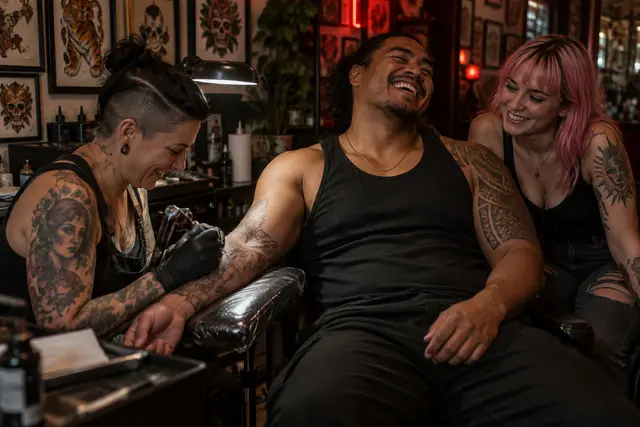
4How do you handle visible tattoos at work?
5Your piercing strategy is…
6When you dye your hair a bold color, you think about work…
7How many reliable work outfits do you have ready right now?
8If someone comments on your alt style at work, you usually…
9Your understanding of workplace rights and appearance policies is…
10Your ideal work style goal is…
Why alt work style feels extra confusing right now
Work clothes used to be annoying, but at least the rules were obvious in many offices: slacks, button-up, maybe a blazer, please leave your entire personality in the parking lot. Now the rules are fuzzier. Hybrid work, return-to-office schedules and TikTok workwear trends have made “business casual” feel like a cursed riddle written on a break room napkin.
A 2025 IWG workwear report found that hybrid workers care a lot about flexible clothes that can move between work and regular life, and it named styles like “quiet luxury” and “office siren” as part of the current workwear conversation. Monster also reported in 2025 that 43% of workers said their office had no dress code, which sounds freeing until you are standing in front of your closet at 7:12 a.m. wondering if a mesh sleeve counts as “collaborative culture.” (work.iwgplc.com)
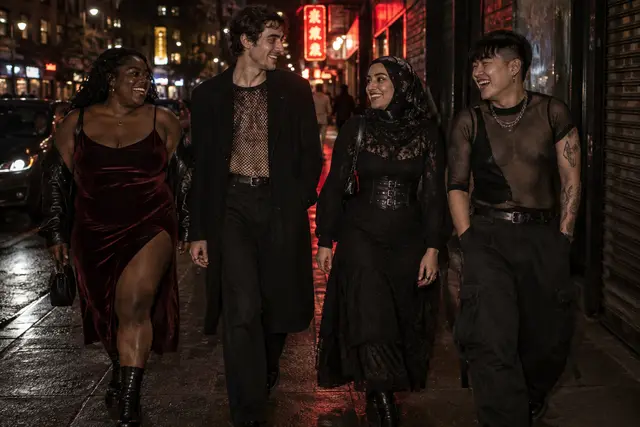
For alt people, the confusion gets sharper because our style often includes visible identity markers: tattoos, piercings, dark makeup, shaved sides, colored hair, platforms, spikes, patches, chains, religious symbols, protective hairstyles, handmade pieces, thrifted weirdness and the sacred black cardigan that has seen every era of your life.
The goal is not to become less alt. The goal is to understand the room, choose your battles and build a work version of your style that says, “I know what I’m doing,” not “I got dressed during a power outage in a vampire attic.”
The quick legal-ish reality check, without the scary fog machine
This is general info, not legal advice. Workplace appearance rules depend on where you live, your job, your industry and the exact policy.
In the U.S., employers can generally set dress codes, but those rules cannot be discriminatory and may need to allow accommodations for religion, disability and other protected reasons. The EEOC says employers may generally establish dress codes for employees or job categories, while also warning that employment policies can become illegal if they discriminate or screen people out based on protected traits without a business need. (eeoc.gov)
Tattoos and piercings are usually not protected by themselves under federal discrimination law, though things can get more complicated if a tattoo, piercing, garment or grooming practice connects to religion, disability, race, national origin or another protected category. Justia’s employment law overview explains that dress and grooming rules are generally allowed if they are not discriminatory, and workplace attire policies may differ by job role. (justia.com)
Hair deserves extra care. Many states and cities have passed CROWN Act-style protections against discrimination based on natural hair texture and protective hairstyles associated with race. California’s HR guidance, for example, notes that grooming policies banning certain hairstyles can have a disparate impact and that California law protects hair texture and protective styles including braids, locks and twists. (p-hrcalifornia.calchamber.com)
Translation for the everyday office crypt: read the policy, save screenshots or handbook pages, ask clear questions, and do not assume “no one said anything yet” means “this will never become an issue.”
What your quiz score means
Your score is not a judgment of how “professional” you are. Professionalism is showing up, doing the work, communicating clearly, respecting people and not microwaving fish in a shared kitchen like a chaos goblin with no fear of consequences.
Your score measures how prepared your alt look is for workplace rules and social signals. Big difference.
0–8: The Beautiful Workplace Menace
You have a strong personal style and possibly a tiny allergy to being told what to do by a PDF called “Appearance Standards Final FINAL.” Respect. But this score means you may be gambling more than you realize.
Start with three moves:
- Read the dress code before your next interview or office day.
- Build one polished “safe mode” outfit.
- Decide which style details are non-negotiable and which ones can flex.
Your goal is not to become boring. It is to stop being surprised by rules that were hiding in the employee handbook like a cursed doll.
9–17: The Casual Crypt Keeper
You probably know the basics. You can dress up when needed, but your work look may still depend on vibes, luck and whatever was clean. You might be fine in a creative office and stressed in a client-facing role.
This is a great range for building a capsule work uniform: black trousers, clean boots, a fitted top, a cardigan or blazer, one signature accessory and a hair or makeup plan that takes less than ten minutes. If you want outfit ideas that still feel like you, start with goth outfit ideas and adapt the cleaner silhouettes for work.
18–25: The Polished Night Creature
You have figured out the secret: the more intentional your outfit looks, the more room people often give your alt details. A sharp black blazer can make a nose ring look like a design choice. Clean boots can make an all-black outfit look expensive instead of “laundry delay incident.”
You probably know when to go subtle and when to turn up the drama. Keep documenting what works. Save a few photos of your best interview, office and client-day outfits so future-you is not panicking in socks.
26–30: The Boardroom Vampire Consultant
You are terrifyingly prepared. You can read a room, decode “smart casual,” and make dark style look expensive even if half the outfit came from a thrift rack and spite.
Your next challenge is helping others without becoming the office fashion warden. Share tips, normalize self-expression, and remember that not everyone has the same budget, body, hair texture, gender expression or comfort level with being noticed at work.
Build an alt work wardrobe that survives real life
The best alt work wardrobe is not a separate identity. It is your style translated into workplace grammar.
Think of it like music. Your weekend look might be the full distortion pedal. Your office look is the same song arranged for a room with fluorescent lights and a printer that jams every Thursday.
Start with the “three anchors” rule
For most offices, a look feels work-ready when it has at least three polished anchors:
| Anchor | Easy examples | Alt-friendly twist |
|---|---|---|
| Structure | Blazer, tailored coat, crisp button-up | Black velvet blazer, cropped jacket, sharp vest |
| Clean lines | Straight trousers, midi skirt, dark jeans if allowed | Wide-leg black pants, long black skirt, pointed flats |
| Controlled detail | One statement piece, not twelve | Silver pendant, subtle chain belt, dark floral scarf |
| Grooming plan | Neat hair, clean nails, tidy makeup | Smoked liner, deep lip, sleek dyed hair |
| Work shoes | Boots, loafers, flats, clean sneakers if allowed | Buckle boots, platform loafers, pointed ankle boots |
This does not mean hiding. It means choosing your strongest details so the whole look feels deliberate.
Use “one loud thing” on strict days
If your workplace is conservative, try one loud thing at a time:
- Black outfit + burgundy hair.
- Simple dress + visible tattoos.
- Blazer + septum ring.
- Button-up + dramatic eyeliner.
- Clean boots + patterned tights.
If everything is loud at once, a strict workplace may focus on the outfit instead of your work. If one thing is loud, it often reads as personal style.
Keep a desk emergency kit
Every alt worker deserves a tiny office survival kit:
- Lint roller, because black fabric is a pet hair magnet even when you do not own a pet.
- Plain black cardigan for surprise meetings.
- Backup earrings or retainers if your role needs them.
- Hair ties, clips or gel.
- Bandages for boot crimes.
- A small makeup bag for touch-ups.
- A spare plain top if coffee, lunch or copier toner attacks.
This is not selling out. This is tactical darkness.
Tattoos, piercings and colored hair at work
Visible body art is much more common than it used to be, but policies still vary hard by industry. A design studio, lab, warehouse, school, hospital, bank, law office, salon and restaurant can all have different rules. Even inside one company, client-facing roles may be stricter than back-office roles.
SHRM’s workplace guidance has noted that tattoo and piercing policies should be clear, written and applied consistently. It also points out that job seekers and employees can be uncertain when a company’s stance is not obvious, which is exactly where awkward surprises happen. (shrm.org)
For tattoos, ask yourself:
- Is the content workplace-safe?
- Can I cover it quickly if needed?
- Does my role involve clients, patients, kids, food safety or uniforms?
- Has the policy changed since I was hired?
For piercings:
- Are there safety rules around machinery, food service, labs or healthcare?
- Can jewelry be swapped for smaller pieces on strict days?
- Does the handbook name facial piercings, gauges or dangling jewelry?
For colored hair:
- Is the rule about color, neatness or safety?
- Are protective hairstyles being treated fairly?
- Do people in higher roles have visible personal style too?
If you love changing your hair, bookmark alt hair color ideas for inspiration, then think through maintenance before a big interview season. Fresh dye looks intentional. Faded chaos can be cool, but some offices read it as less polished.
Interview mode: show yourself, but edit for signal
A job interview is not the time to cosplay as someone who will never show up again. If you hide every tattoo, remove every piercing, flatten every hint of style and then arrive on day one as your full bat self, the issue may become trust rather than fashion.
At the same time, interviews are high-signal moments. People are deciding if you understand the role, the company and the room. Your look can help them focus on your skills.
A strong interview formula:
- Research the company’s visual culture. Look at team photos, LinkedIn posts and public event pics.
- Dress one notch sharper than the daily norm. If they wear hoodies, try a clean dark sweater. If they wear business casual, add a blazer.
- Keep one or two authentic details. A small piercing, dark nails, a favorite ring, polished eyeliner.
- Ask about dress expectations after you have momentum. Try: “What does dress usually look like for this role on office or client days?”
That question is calm, normal and useful. It is not you asking permission to exist.
The secret power of a work uniform
A work uniform saves energy. It also turns your style into a signature instead of a daily panic ritual.
Try one of these:
The Corporate Cryptid
- Black trousers
- Soft black tee or mock neck
- Long cardigan or blazer
- Clean boots
- Silver ring stack
Good for: tech, admin, creative offices, hybrid roles.
The Funeral Director of Spreadsheets
- Black button-up
- Tailored vest
- Straight pants
- Polished shoes
- Minimal dark makeup
Good for: interviews, meetings, finance-adjacent offices, “please look serious” days.
The Friendly Desk Witch
- Dark midi skirt
- Tucked blouse
- Cardigan
- Pendant or scarf
- Low boots
Good for: education, libraries, nonprofits, reception roles, office days with lots of people.
The Punk Who Read the Handbook
- Dark jeans if allowed
- Plain top
- Work jacket
- Smaller jewelry
- Clean sneakers or boots
Good for: casual offices, warehouses, studios, field roles, startups.
If your tattoos are part of your style, alt tattoo ideas can help you think about placement and themes before your next piece. Placement matters when you work somewhere with strict sleeves, uniforms or client rules.
How to push for more style freedom without becoming the office incident
If your workplace is strict, you may be able to open the door a little. The trick is to make it easy for managers to say yes.
Try this approach:
- Ask for the reason behind the rule. Safety? Clients? Brand image? Old policy nobody has touched since dial-up internet?
- Offer a specific compromise. “Could small nose studs be allowed if jewelry is secure?” works better than “This policy is trash,” even if the policy is, spiritually, trash.
- Point to consistency. If some people get exceptions and others do not, ask for clarity.
- Keep it about work. “This would help employees feel comfortable while maintaining a polished standard.”
- Know when to save energy. Some jobs are stepping stones, not soul homes.
And if you need to decompress after a day of pretending your boots are “just boots,” Alt Chat has Night Chats and profile Anthems where you can hang with people who get why a dress code can feel weirdly personal.
Tiny upgrades that make alt style read more intentional
Here are low-drama changes that can make a big difference:
- Steam or iron black clothes so they do not look dusty and defeated.
- Replace stretched-out black basics once they go gray-green sadness mode.
- Keep shoes clean, especially platforms and boots.
- Choose jewelry that does not jangle loudly during meetings.
- Use dark makeup with clean edges for stricter settings.
- Carry a blazer, cardigan or overshirt for instant polish.
- Match metals if you want a sleeker look.
- Use texture instead of volume: velvet, satin, rib knit, leather-look details, lace trim.
For makeup that can go subtle or full drama, goth makeup for beginners is easy to scale down for work. Think soft liner for Monday, sharper wing for Friday, full moon ritual eyes for after-hours plans.
Final thought: you are allowed to be visible
Work can pressure alt people to become the least noticeable version of themselves. Sometimes you will choose subtlety because rent is real, meetings are boring and not every hill needs a velvet cape planted on it.
But subtle is not the same as erased. A black blazer, a tiny bat necklace, a deep lip, a visible tattoo, a silver ring, a shaved side, a careful pair of boots — these can all be signals that you are still in there.
The best alt work dress code strategy is not “hide forever.” It is “know the rules, learn the room, protect your peace and keep enough of yourself visible that Monday does not eat your soul.”
FAQ
Can I have tattoos at work and still look professional?
Yes, in many workplaces tattoos are normal now, but policies still vary by industry, role and manager. Read the dress code, notice what senior people wear, and keep anything offensive or distracting covered in stricter settings.
Can an employer make me cover piercings or dyed hair?
Often, yes, if the rule is applied consistently and does not violate discrimination or accommodation laws. If your hair texture, protective style, religion or disability is involved, ask HR about accommodations and check your local rules.
How do I dress goth for a business casual office?
Start with black basics that already read professional: trousers, a midi skirt, boots, button-ups, cardigans, blazers and clean jewelry. Then add one alt detail at a time, like a silver pendant, dark lipstick, subtle eyeliner, patterned tights or a deep red shirt.
Should I hide my alt style for a job interview?
You do not have to erase yourself, but it helps to dress one notch more polished than the workplace average. If you have visible tattoos, piercings or bright hair, use the interview to learn the culture instead of guessing forever.